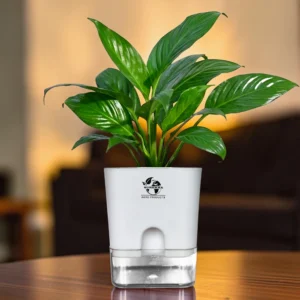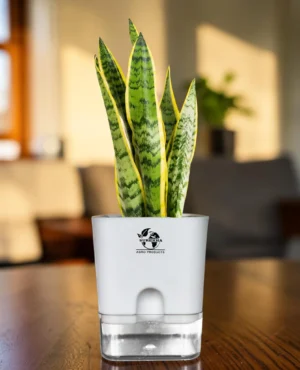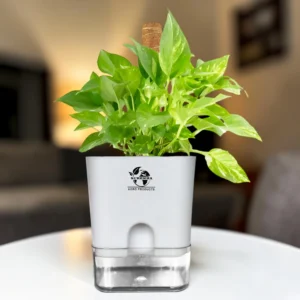
You have watered the plants, straightened the pots and dusted the shelf. Then the light catches your aglaonema: its leaves have a grey film of their own. A little leaf cleaning belongs in that same quiet household routine. You can usually start with what is already beside your sink.
To clean indoor plant leaves, gently wipe smooth foliage with a soft cloth dampened with plain, lukewarm water. Support each leaf from underneath, clean both sides and rinse the cloth as it picks up dirt. Use a soft brush for hairy leaves. Skip the polish. Iowa State recommends plain water for ordinary dust; Clemson distinguishes damp wiping for smooth leaves from brushing hairy ones. Iowa State cleaning advice · Clemson leaf-care guidance.
Look at the leaf before reaching for the cloth
Start with one plant rather than turning the whole collection into a washing project. Are its leaves broad and smooth, small and numerous, or covered in fine hairs? That difference decides which tool will make the job easier.
- Smooth and broad →Soft damp cloth
Support the leaf underneath. - Many small leaves →Gentle lukewarm rinse
Only if the plant is easy to handle. - Hairy or fuzzy →Soft dry brush
Use light strokes.
A cloth lets you work carefully around an aglaonema, peace lily or rubber plant. For a manageable plant with many small leaves, a gentle sink rinse can save handling each one. Check the water temperature and pressure first. A soft cosmetic brush is a useful option for hairy foliage such as African violets. Iowa State’s cleaning methods and Clemson’s guidance for hairy leaves explain these choices.
A gentle wipe for smooth leaves
Set a bowl of lukewarm water, a clean soft cloth and a towel beside the plant. Choose a stable surface with enough room to turn the pot. You should be able to reach the back without leaning on the stems.
- Dampen and wring out the cloth. Start with water alone. You want a soft wiping surface, not a stream running down into the pot.
- Rest the leaf on your other hand. Keep it in its natural position and make light passes over the upper surface. Turn your hand carefully to reach underneath. Avoid tugging the leaf stalk.
- Rinse the cloth when it looks dirty. Change the bowl water rather than rubbing the same dust onto the next leaf. Work around the plant at a comfortable pace.
- Finish at the pot. Wipe splashes from its outside and the shelf. If you rinsed the foliage, let excess water drain before returning the plant to its decorative container.
The basic cloth-and-water approach follows Iowa State’s recommendation. Cleaning the upper and lower surfaces of smooth leaves is also recommended by Clemson Extension.
Keep this task separate from watering. If the mix is still moist, wiping the leaves gives you more control than showering the entire pot. For a reservoir planter, our self-watering pot guide explains how to check the reservoir and potting mix before refilling.
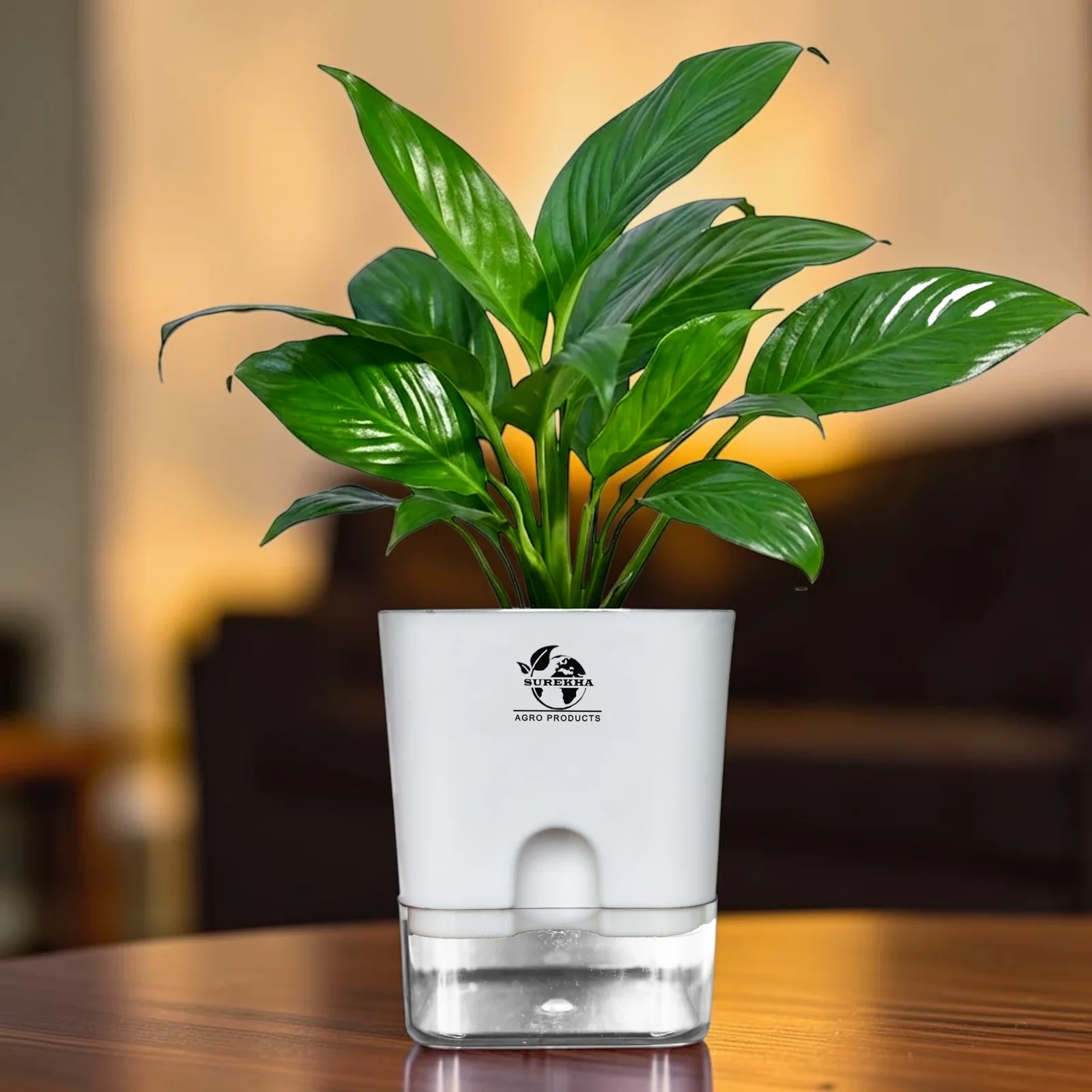
Let your room set the routine
Rather than adding another fixed date to your calendar, look at a leaf when you check the plant. If dust is visible or comes away on a light wipe, clean it. A plant beside an open, road-facing window may need attention sooner than one in a sheltered room. Put the cloth where you keep your watering supplies so the small job is easy to remember.
Cleaning helps remove the dust that can intercept light before it reaches foliage. It does not replace a suitable growing position. The University of Minnesota’s houseplant guide treats leaf cleaning and improving light as separate care tasks. For a rubber plant, use our placement and watering guide alongside this routine.
| What your home is like | A useful adjustment |
|---|---|
| Dusty, dry weather or an open window facing a busy road | Look for fresh dust when you check the plant; clean according to the buildup you actually see. |
| Cool northern winter mornings or a hill-station home | Choose a comfortable daytime spot indoors. Use lukewarm water rather than taking a tropical plant outside for a cold hose-down. |
| Humid coastal weather or a spell of monsoon rain | Choose a wrung-out cloth when you only need to remove dust and the pot is already wet. |
These are ways to organise the task, not different cleaning recipes for every city. The leaf surface and the condition of the pot still guide your choice.
If the mark stays, stop polishing
A loose film of dust should lift onto the cloth. A brown patch, sticky surface or cottony cluster needs a closer look. Check the leaf undersides and where leaves meet stems. Minnesota Extension notes that sticky honeydew can accompany sap-feeding insects and recommends separating a plant if pests are found. See its indoor-pest identification guidance.
Photograph the mark clearly before choosing a treatment. Show the whole plant as well as the affected area; a close-up alone leaves out the growing conditions. Washing may remove some pests, but repeated wiping is not a diagnosis. Do not keep scrubbing a damaged leaf to make its colour match the others.
Questions that come up at the sink
Should I add dishwashing liquid?
For ordinary dust, use plain water. Iowa State warns that household detergents can damage a leaf’s protective surface. If there is a pest problem, choose an appropriate treatment for the identified pest rather than improvising a stronger cleaning mix. Source: Iowa State.
Can I use milk, oil or leaf-shine spray?
Leave the homemade polish in the kitchen. Minnesota Extension advises against milk and leaf-shine products; Clemson also discourages shine coatings. Clean foliage does not need a glossy finish applied to it. Minnesota leaf-care advice · Clemson on shine products.
What if pale water marks remain?
First check whether they are surface marks or changes in the leaf itself. Try a gentle plain-water wipe on a small area and look again once it dries. If the marks remain, pause and investigate; there is no need to escalate to an acidic kitchen mixture for routine dust removal.
Make room for a plant you enjoy looking after
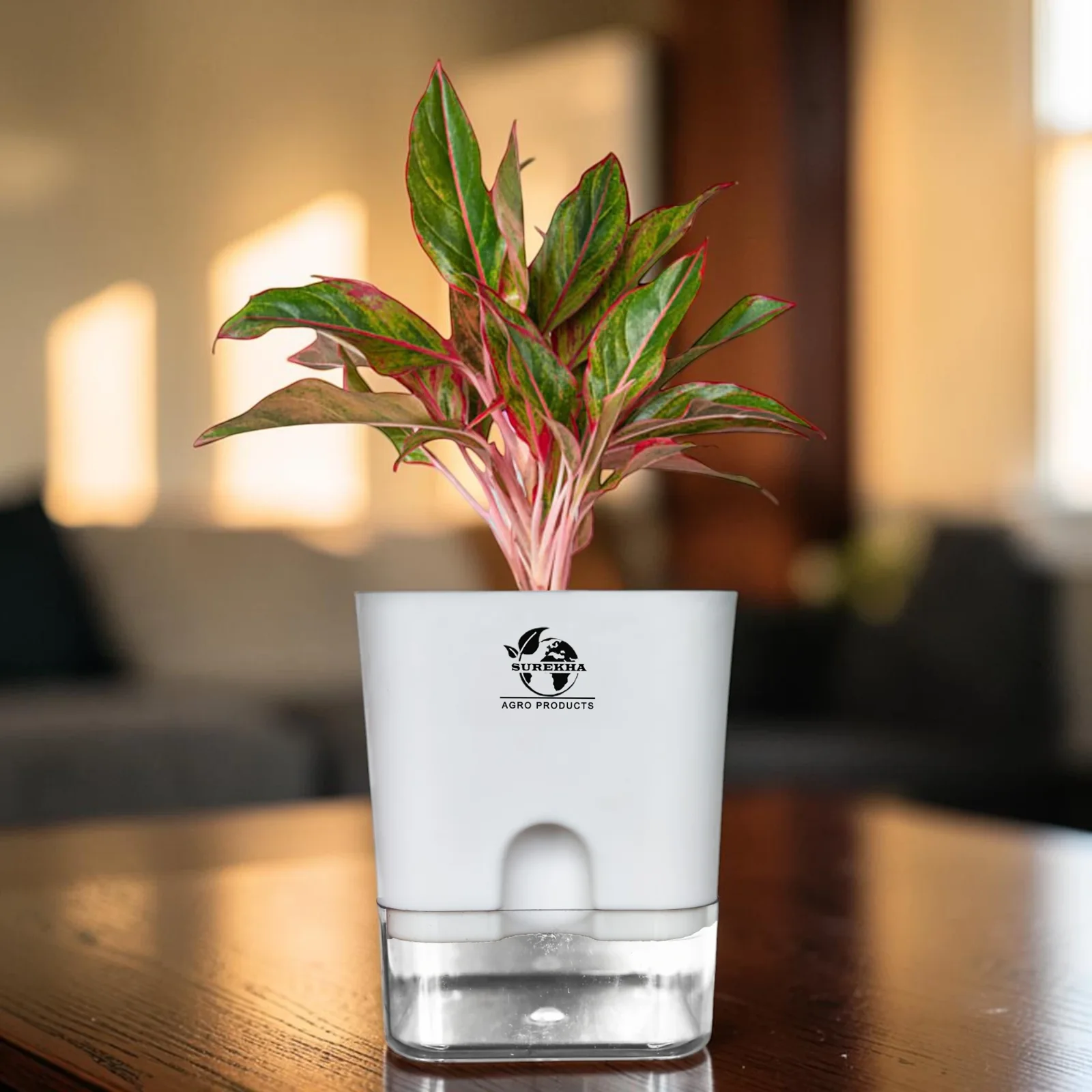
Leaf cleaning is a chance to notice the shape and colour that made you choose the plant. If you enjoy broad, patterned foliage, explore Surekha’s red aglaonema, shown above. Start with a suitable position at home, then keep its care simple: check the plant, wipe away dust when needed and give each leaf a gentle hand.