A peace lily not flowering often needs brighter indirect light or more time to mature. Start with its position, then check drainage, watering and recent changes. A healthy leafy plant can pause between blooms; adding extra fertiliser or deliberately drying it out does not provide a reliable flowering timetable.
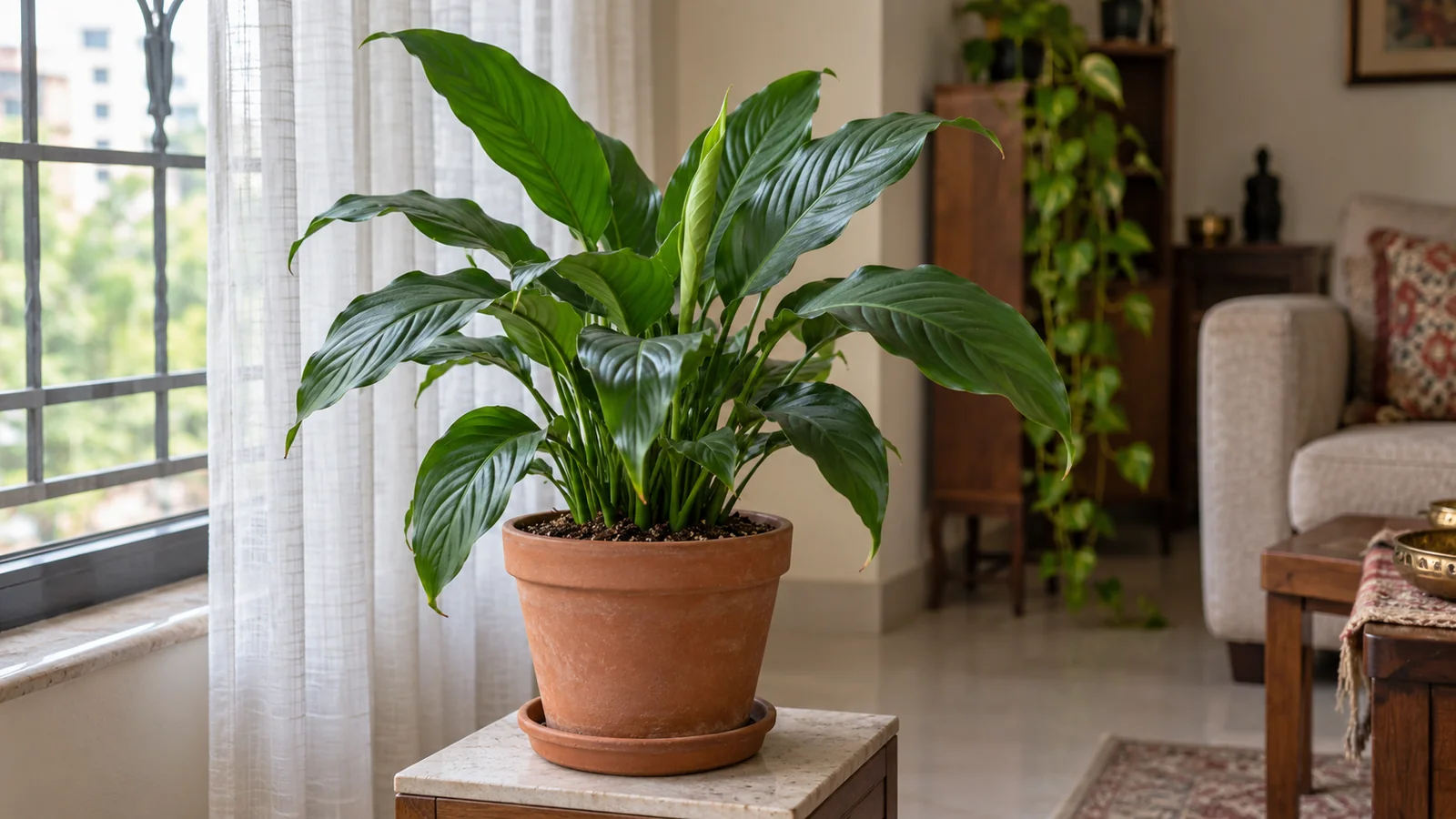
Why is your peace lily growing leaves but no flowers?
Separate a healthy plant with no blooms from a plant that is struggling. Clemson Extension identifies low light and immaturity as common reasons for poor flowering. A purchase date alone does not tell you a plant’s age. Source: Clemson HGIC peace lily guide.
| What you see | Check first | Practical next step |
|---|---|---|
| Healthy leaves, no flower stalks | Light at the actual leaf position; plant maturity | Review the window position before buying a flowering supplement. |
| Blooms stopped after purchase | New home conditions and the normal gap between flowering cycles | Keep a record of new leaves and care changes. |
| Wilting while the mix is wet | Drainage, standing water and root condition | Investigate root stress before trying to encourage flowers. |
| Recently divided or repotted plant | Recovery and active growth | Avoid another immediate disturbance solely to chase blooms. |
| Older white spathes turning green | Age of that individual bloom | Distinguish an ageing spathe from a new flowering problem. |
1. Check light before changing fertiliser
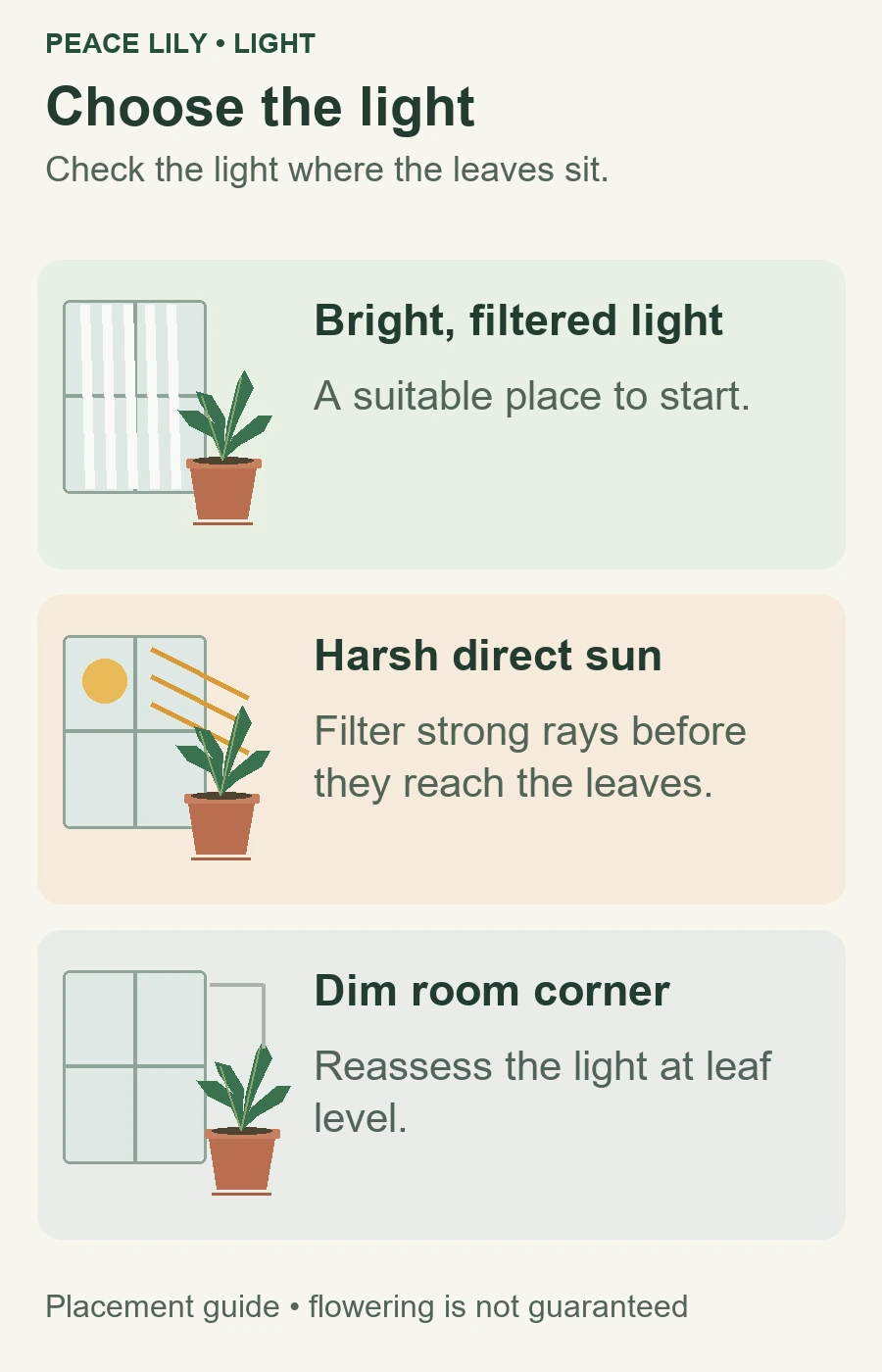
Peace lilies can survive a shaded indoor position that does not support good flowering. Give the plant bright, filtered light, protecting it from harsh direct sunshine. The RHS specifically links a lack of flowers with insufficient light. Source: RHS growing guide.
Assess the spot beside the leaves, rather than judging how bright the room looks from its doorway. A balcony roof, window grill, neighbouring building and thick curtain can all change that spot. University of Minnesota Extension explains that indoor light varies with intensity, duration and distance from a window. Source: University of Minnesota indoor lighting guide.
Try a brighter suitable window position and note the change. Avoid moving an indoor plant straight onto an exposed terrace. If you use a grow light, follow its placement guidance and assess the plant’s response; an ordinary decorative lamp is not a useful substitute just because it looks bright.
Allow for maturity and the nursery-to-home change
A flowering plant at a shop is a snapshot, rather than evidence that it will flower continuously at home. Commercial growers can use controlled flowering treatments, including gibberellic acid, to prepare peace lilies for sale. This does not establish how any particular purchased plant was grown, and it is not a recommendation for home hormone treatment. Source: University of Florida commercial Spathiphyllum production guide.
Judge progress by healthy new growth as well as flowers. Avoid setting a seven-day or two-week deadline for a new stalk after changing the plant’s position.
2. Stabilise watering, drainage and feeding
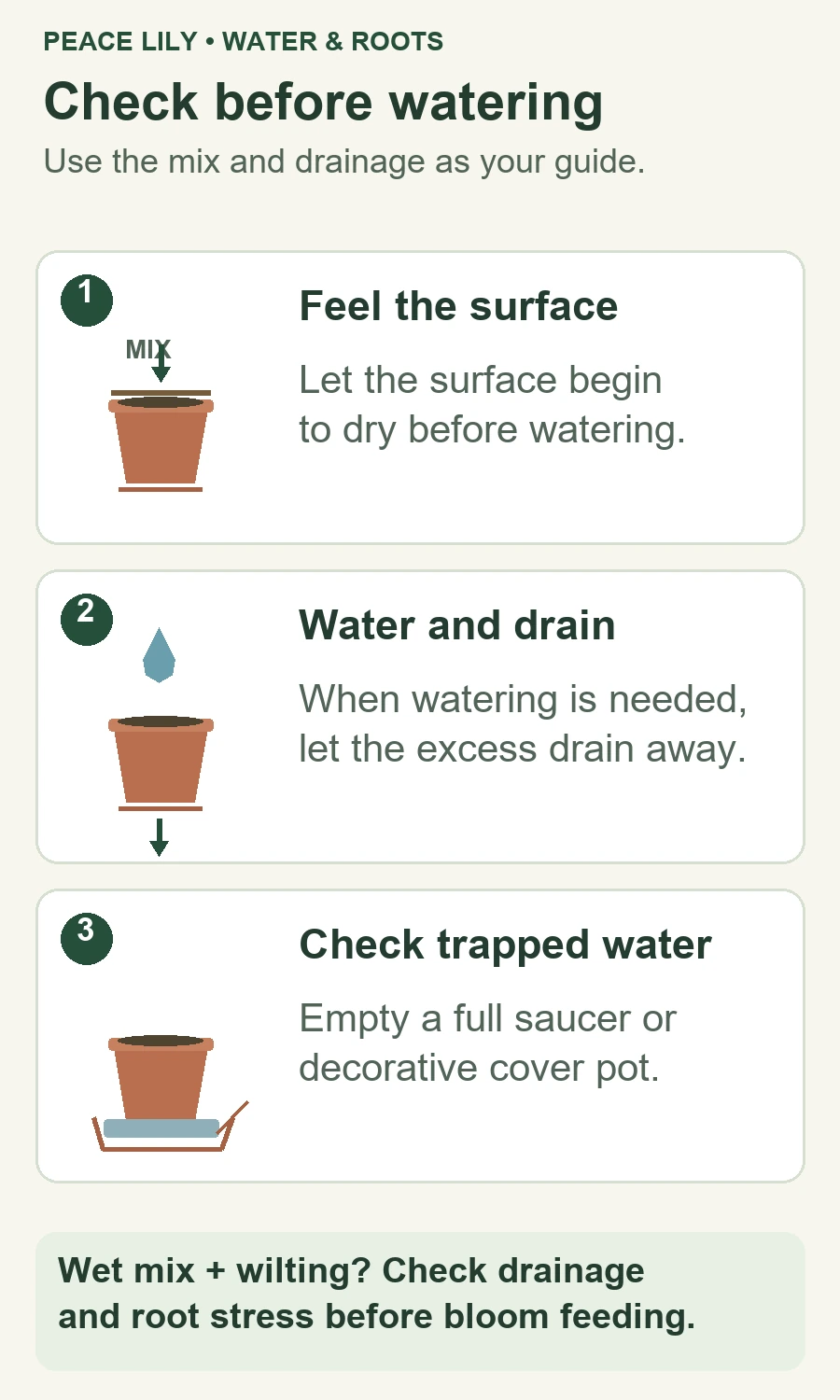
Check the potting mix before watering. Let its surface begin to dry, then water appropriately for the container and allow excess to drain. Do not leave a conventional nursery pot standing in a full saucer or decorative cover pot. Persistent wetness and repeated severe wilting both need attention. Clemson advises moist, well-drained conditions and cautions against overwatering. Source: Clemson watering guidance.
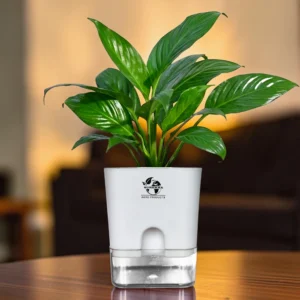
Use observations instead of a fixed weekly schedule. Write down whether the mix was still wet when you watered, and whether drainage water remained trapped afterward. With a reservoir planter, identify its actual wick, insert and overflow arrangement; our self-watering pot guide explains the setup and refill checks.
Should you repot a peace lily that will not flower?
Do not repot solely because flowers are absent. If roots are genuinely crowded, Clemson recommends a modest increase in pot size; an oversized container can stay too wet. Root problems take priority over bloom feeding. Source: Clemson repotting guidance.
If feeding is needed during active growth, use a suitable houseplant fertiliser according to its label and account for feed already in the mix. More is not automatically better: excessive soluble salts can damage leaf edges and roots. Source: UF/IFAS nutrition guidance. Avoid combining several supplements in an attempt to trigger buds. Our Epsom salt guide explains why a magnesium supplement is not a general flowering remedy.
3. Match care to your Indian home conditions
Use local conditions rather than a single flowering calendar for all of India. The following are practical checks for different homes, not predictions of a flowering month.
| Home conditions | What to inspect | Useful adjustment |
|---|---|---|
| Hot, dry weather or an air-conditioned room | Direct hot sun, rapid drying and an AC outlet facing the plant | Choose filtered window light and move the pot clear of the air blast. |
| Humid coastal home or cloudy monsoon spell | Whether the usual corner has become dimmer or the mix stays wet longer | Reassess light and check moisture before repeating the old watering routine. |
| Cool northern winter or a cool hill home | Cold window glass, night draughts and slowing growth | Keep a bright sheltered indoor position and adjust care to observed growth. |
The underlying care principles are warmth, filtered light and protection from cold draughts, as described by the RHS peace lily overview. They do not mean every Indian room needs identical watering or feeding.
A simple care check before buying a bloom booster
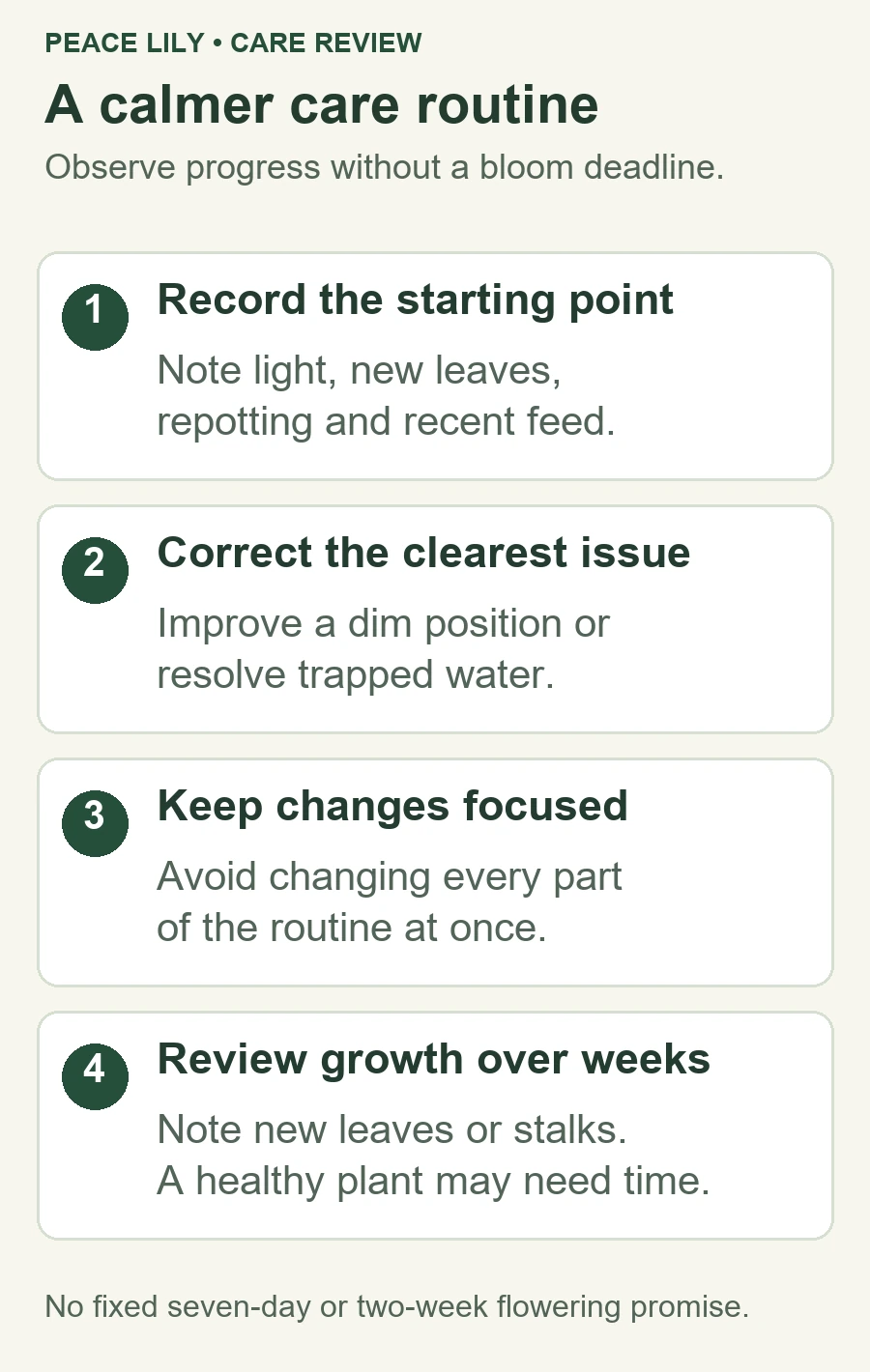
- Record the starting point: window position, new leaves, last repotting and recent feed.
- Correct the clearest issue: improve a dim position or resolve trapped drainage water.
- Keep observations comparable: avoid changing light, pot, fertiliser and watering together without a reason.
- Review growth over the following weeks: photograph the same plant position and note new leaves or stalks. A healthy plant may still need time.
If buying a plant, review the current Surekha Peace Lily listing for its pot configuration and availability. Choose a suitable home position first; delivery with flowers and continuous flowering should not be assumed.
Peace lily flowering FAQs
Does a peace lily need direct sunlight to flower?
Start with bright indirect or filtered light. Moving it into harsh midday sun can damage foliage; first inspect whether curtains and obstructions are making its current spot too dim.
Why did the white flower turn green?
The showy white part is a spathe surrounding the spadix, which carries the tiny flowers. Greening as a spathe ages can be normal. You can remove a spent stalk at its base; wear gloves and keep cut material away from children and pets because the sap is irritating. Source: RHS flower and pruning guidance.
Can I make it flower all year in India?
Do not expect a reliable year-round display from every plant. Keep the growing conditions suitable and assess its actual growth, maturity and flowering cycle. No universal fertiliser dose or calendar can promise continuous blooms in every home.