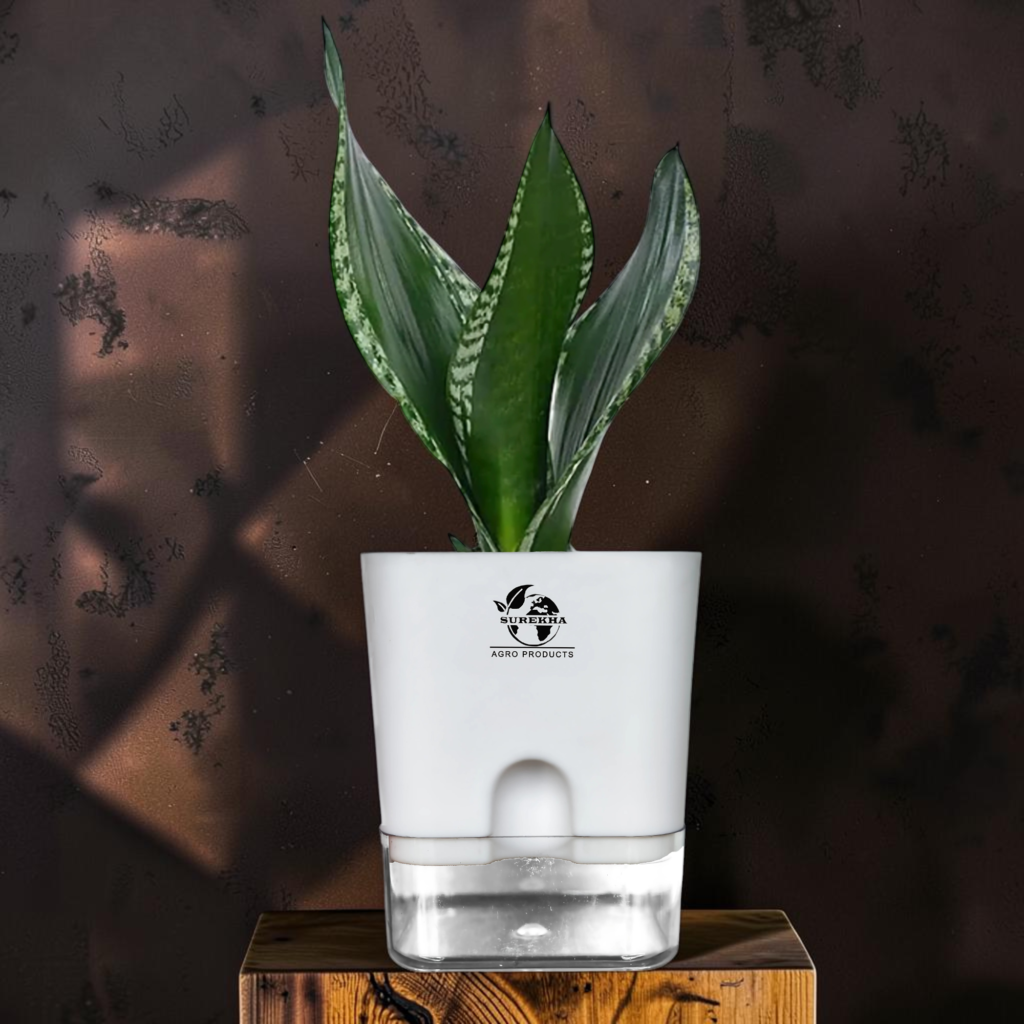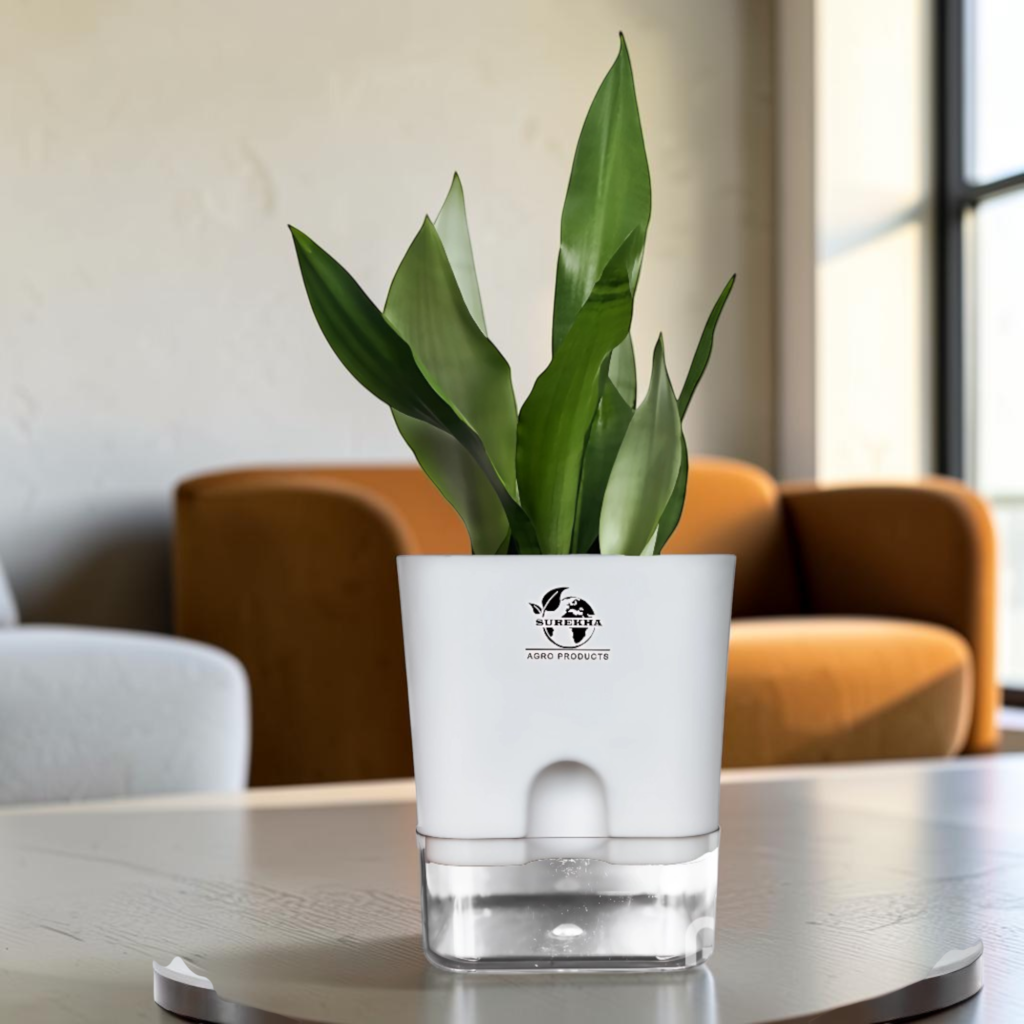
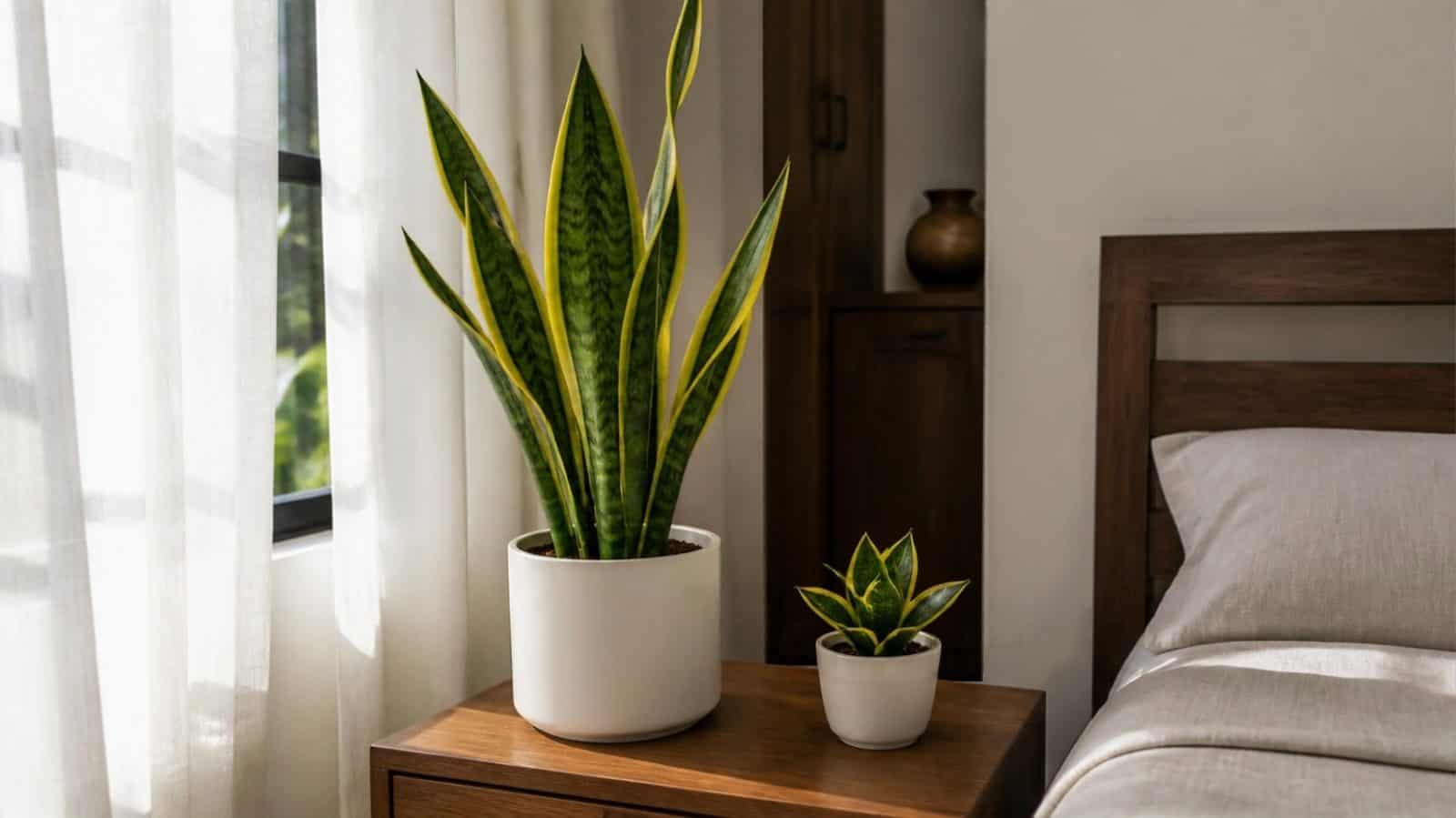
The snake plant is one of the most popular indoor plants in Indian homes, and for good reason. It survives missed waterings, copes with dim corners and looks sharp in almost any room. But many lists of snake plant benefits mix real advantages with claims that do not hold up, such as “one plant purifies your whole room” or “it fills your bedroom with oxygen at night”.
Quick answer: A snake plant is a very good plant for most homes. Its real benefits are that it is extremely low-maintenance, tolerates low light and Indian heat, takes in carbon dioxide at night, is easy to multiply and makes a calming, long-lived decorative plant. It did remove some chemicals in NASA’s sealed-chamber tests, but a few pots will not noticeably clean the air of a real room, and it does not meaningfully raise oxygen levels at night. It is toxic to cats and dogs if chewed.
Below are 10 benefits backed by evidence, the myths to ignore, how to use the plant in a bedroom, what Vastu traditions say and how to choose the right variety.
Snake plant or Dracaena trifasciata: the same plant
If you have seen the name Dracaena trifasciata and wondered whether it is a different plant, it is not. The snake plant was long known as Sansevieria trifasciata, but botanists have since moved it into the genus Dracaena, and Dracaena trifasciata is now its official name. Researchers at Universitas Indonesia note this change, citing the Royal Botanic Gardens, Kew, in a study of how the plant absorbs carbon dioxide. So “Dracaena trifasciata benefits” and “snake plant benefits” mean exactly the same thing. In India it is also sold as sansevieria, mother-in-law’s tongue or simply “snake plant”.
10 snake plant benefits for your home
1. It is one of the easiest plants to keep alive
The snake plant stores water in its thick, stiff leaves and uses a water-saving form of photosynthesis called crassulacean acid metabolism (CAM). According to the Universitas Indonesia study, CAM is a strategy plants use to make the most of limited or irregular water, with leaf pores opening at night rather than during the hot day. In practice, a snake plant forgives a busy schedule, a week away from home or a forgotten watering far better than most indoor plants. The main way people harm it is by giving too much water, not too little.
2. It grows in low and medium light
Many Indian flats have rooms that never get direct sun. The snake plant manages in these spots, although it grows faster and keeps brighter leaf patterns in bright, indirect light. This makes it a dependable choice for corridors, offices and north-facing rooms. Our list of low-light indoor plants for Indian homes includes other options for dim spaces.
3. It takes in carbon dioxide at night
Because of CAM, a snake plant opens its leaf pores and absorbs carbon dioxide at night, storing it as malic acid and using it for photosynthesis the next day. The Universitas Indonesia researchers measured this night-time uptake in a sealed greenhouse. It is a genuine and unusual trait. However, the same researchers describe the popular claim that a snake plant can relieve low oxygen in a bedroom at night as misleading. The plant’s gas exchange is far too small to change the oxygen level of a room in any way you could feel.
4. It removed indoor chemicals in NASA’s tests, with limits
In 1989, NASA scientist B. C. Wolverton and colleagues tested common houseplants, including mother-in-law’s tongue (then called Sansevieria laurentii), for their ability to remove benzene, trichloroethylene and formaldehyde from the air. The NASA report shows the plants were placed in small sealed plexiglass chambers and tested over 24-hour periods.
That set-up is very different from a home, where fresh air constantly moves in and out. A 2019 review in the Journal of Exposure Science & Environmental Epidemiology analysed 196 results from 12 chamber studies. It concluded that you would need 10 to 1,000 potted plants per square metre of floor space to remove chemicals as fast as normal ventilation already does. So enjoy the snake plant for its other benefits, and rely on opening windows, exhaust fans or an air purifier for cleaner air.
5. Caring for plants can lower stress
A randomised crossover study published in the Journal of Physiological Anthropology compared 24 young adults doing computer work with the same people transplanting an indoor plant. After the plant task, they felt more comfortable and soothed, their sympathetic nervous system activity dropped and their diastolic blood pressure was lower. The study used a general indoor plant rather than a snake plant specifically, but it supports the everyday experience that tending a plant is a calming break from screens.
6. It handles Indian heat and air-conditioned rooms
The snake plant tolerates warm summers, dry air from air conditioners and the stuffy rooms of a closed flat. It is also rarely troubled by pests. The season that needs most care is the monsoon, when soil stays wet for longer and overwatering can quickly cause root rot. Our guide to snake plant care in India explains how to adjust watering through summer, monsoon and winter.
7. It is easy to multiply and share
One healthy snake plant can become several. Mature plants produce side shoots (pups) that can be separated with their roots, and leaves can be rooted as cuttings in water or soil. This makes it simple to fill more rooms or pass plants on to friends. See our snake plant propagation guide for step-by-step methods.
8. It lives for years and rarely needs repotting
Snake plants grow slowly and do not mind being slightly crowded in their pots. A plant in a well-drained pot can go a long time between repottings, and with sensible watering it can stay attractive for many years. That makes it good value compared with plants that decline after a season indoors.
9. It suits small spaces and modern interiors
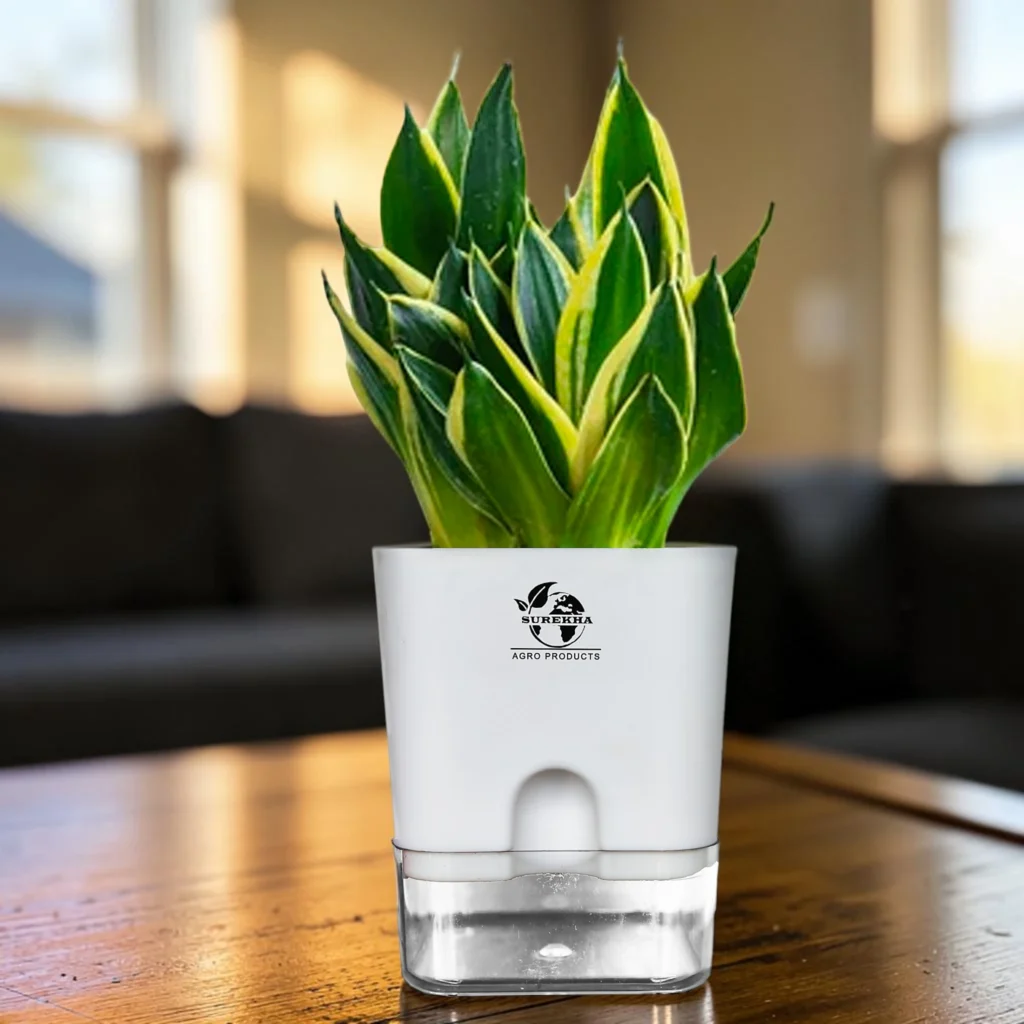
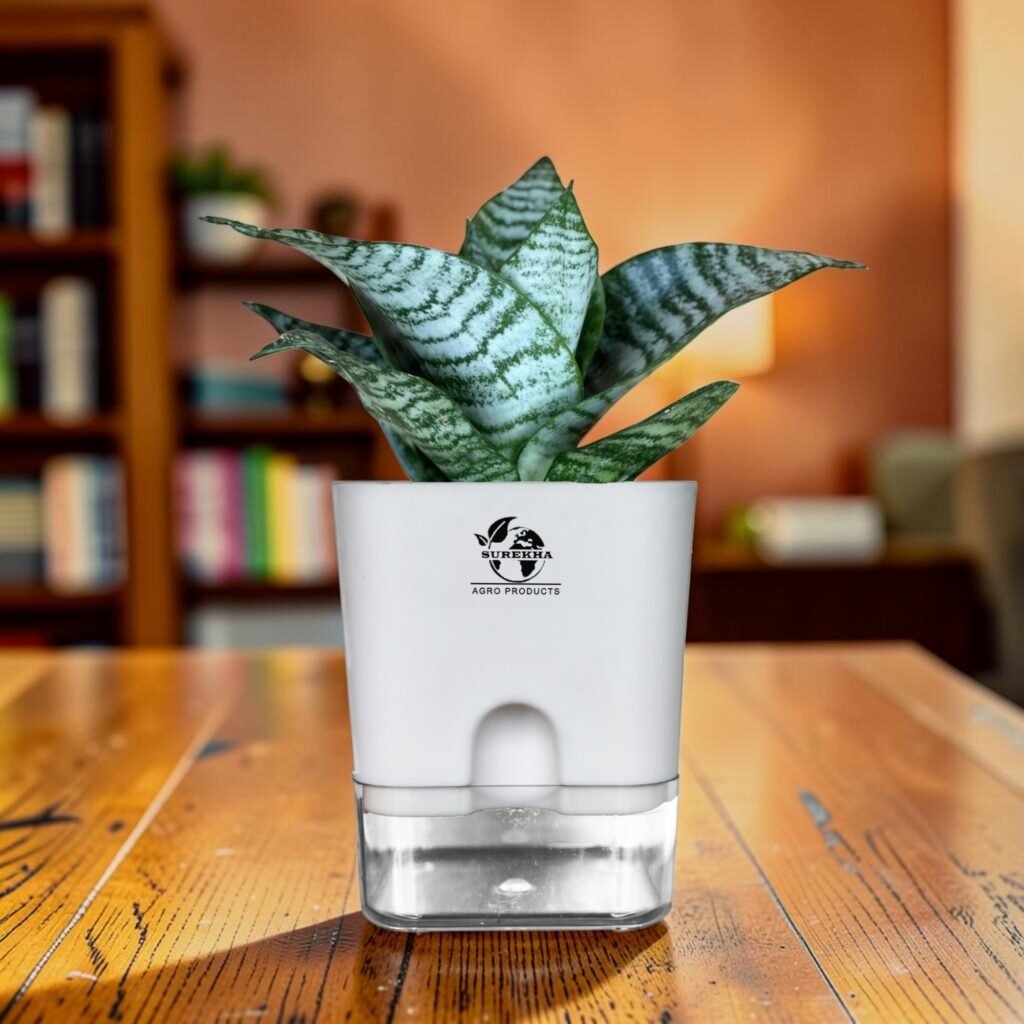
Its upright, sword-shaped leaves take up little floor space while adding height. Tall types work as floor plants beside a sofa or doorway, and compact rosette types such as hahnii fit on a desk, shelf or bedside table. The range of leaf colours, from deep green to silver and yellow-edged, lets you match the plant to your room.
10. It is a traditional symbol of good luck
The snake plant is widely gifted as a good-luck or housewarming plant. The ASPCA even lists “Good Luck Plant” among its common names. In India it is also popular in Vastu-based home décor, covered below. These are cultural meanings rather than measurable effects, but they are a big part of why people enjoy keeping one.
Snake plant myths to ignore
| Claim you may read | What the evidence says |
|---|---|
| “A snake plant fills your bedroom with oxygen at night.” | It takes in carbon dioxide at night, but the oxygen it adds is far too small to matter. Researchers studying its night-time gas exchange call the bedroom-oxygen idea misleading. |
| “One snake plant purifies a whole room.” | NASA’s results came from small sealed chambers. A 2019 review estimated that 10–1,000 plants per square metre would be needed to match normal ventilation. |
| “Snake plants block radiation from phones and Wi-Fi.” | There is no reliable research showing that houseplants absorb or block this kind of radiation. |
| “Snake plants are completely safe for pets.” | The ASPCA lists the plant as toxic to dogs and cats. |
Is a snake plant good for your home?
For most households, yes. It is hard to kill, needs little light, rarely gets pests and looks good for years. A few points to keep in mind:
- Pets: The ASPCA lists snake plant (mother-in-law’s tongue) as toxic to dogs and cats. Its toxic principles are saponins, and the signs include nausea, vomiting and diarrhoea. Keep it out of reach of pets that chew plants, and contact a veterinarian if your pet eats some.
- Small children: As with any houseplant that is not meant to be eaten, place it where young children cannot chew the leaves.
- Overwatering: Soggy soil is the most common cause of yellow or mushy leaves. If your plant already shows these signs, our article on snake plant problems and solutions will help you diagnose them.
- Air quality: Treat the plant as a pleasant addition, not a replacement for ventilation or an air purifier.
Snake plant benefits in the bedroom
A snake plant is a good bedroom plant, but for practical reasons rather than oxygen. It needs watering only occasionally, so it does not add work to your routine. It has no strong scent, copes with curtains drawn for much of the day and is compact enough for a corner or bedside table. It also adds a calm, green touch to the room you rest in.
Place it near a window if you can, keep it away from the bed if you have a pet that sleeps in the room, and use a pot with a drainage hole so water never collects at the bottom. For more ideas, see our list of the best indoor plants for the bedroom in India.
Snake plant and Vastu
Many Indian families keep a snake plant for Vastu reasons, often near the main entrance or in a corner of the living room, where it is believed to bring protection and positive energy. Different Vastu practitioners recommend different directions, and these placements have not been scientifically tested. If Vastu matters to you, follow the advice of the tradition you trust, then check that the chosen spot also gets enough light and that the pot drains well. A healthy plant in the right light will always look better than a struggling one in the “right” direction.
Which snake plant should you choose?
All the common varieties offer the same benefits; the difference is size, shape and colour.
| Variety | Look | Best spot |
|---|---|---|
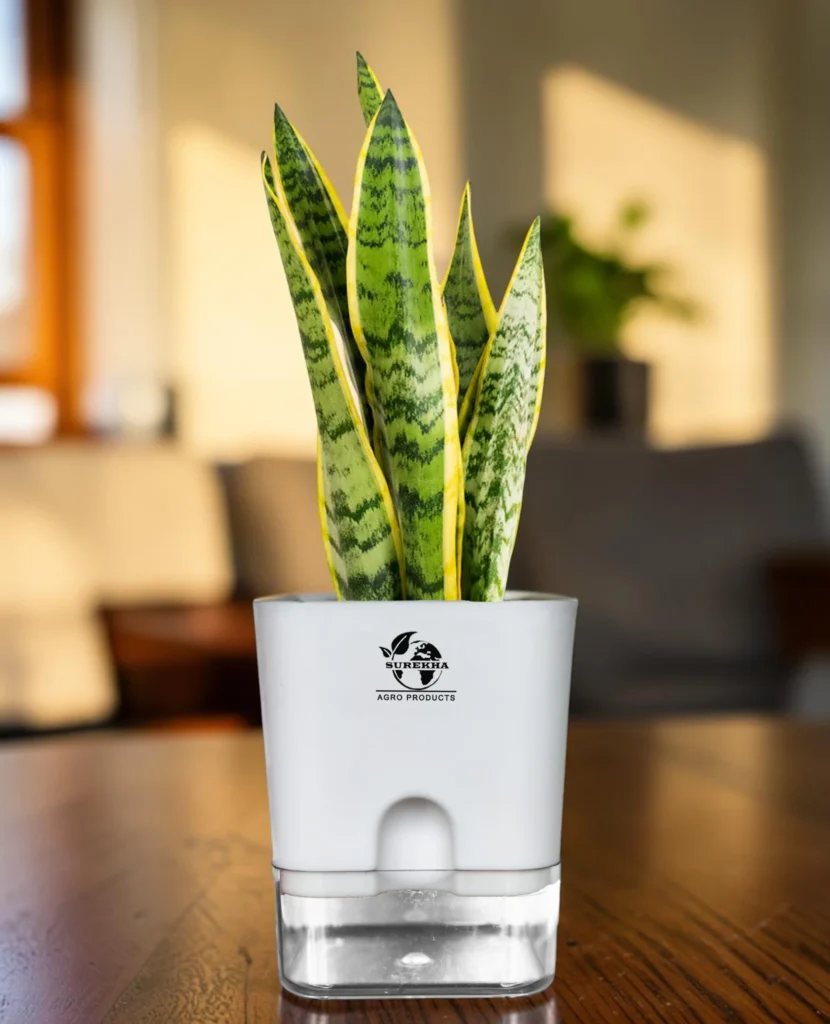
| Laurentii | Tall green leaves with yellow edges | Floor plant in a living room or entrance |
| Superba | Shorter, broader leaves with yellow edges | Side table, shelf or office |
| Zeylanica | Green leaves with grey-green banding | Any room with indirect light |
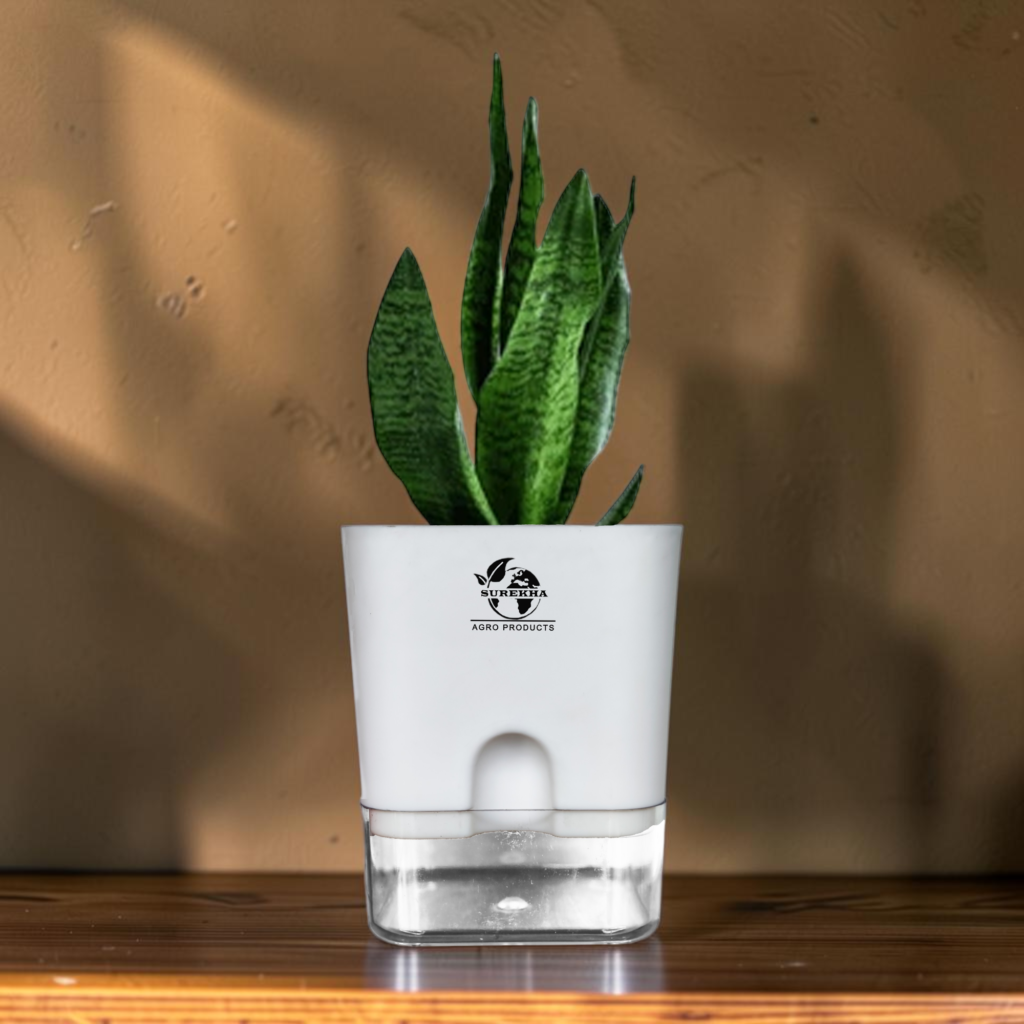
| Green | Plain green, upright leaves | Minimal interiors and low-light corners |
| Whitney | Compact plant with patterned leaves | Desk or bedside table |
| Golden Hahnii | Small rosette with golden-yellow leaves | Desk, window sill or bathroom with a window |
| Silver Hahnii | Small rosette with silvery leaves | Desk or shelf in bright, indirect light |
Simple care to get the most from your snake plant
- Water: Only when the soil is dry most of the way down. In winter and the monsoon this can mean going several weeks between waterings. Our guide on how to water indoor plants explains the finger test.
- Light: Bright, indirect light is ideal; low light is tolerated. Avoid moving a plant from deep shade straight into harsh afternoon sun.
- Soil and pot: A free-draining mix and a pot with a drainage hole.
- Feeding: Light and occasional, during the warm growing months only.
Frequently asked questions
What are the main benefits of a snake plant?
It is very low-maintenance, tolerates low light and heat, takes in carbon dioxide at night, is easy to propagate, lives for years and makes an attractive, calming decorative plant. It is also a popular good-luck and Vastu plant.
Is it good to keep a snake plant in the bedroom?
Yes. It needs little care, has no strong scent and fits small spaces. Just do not expect it to noticeably raise oxygen levels, and keep it away from pets that chew plants.
Does a snake plant give oxygen at night?
It absorbs carbon dioxide at night through CAM photosynthesis, but the amount of gas it exchanges is tiny compared with the air in a room. It will not make a measurable difference to bedroom oxygen.
How many snake plants are needed to purify a room?
Far more than anyone keeps at home. A 2019 review estimated 10–1,000 potted plants per square metre of floor space to match the cleaning effect of normal ventilation. Keep a snake plant for its other benefits and ventilate your rooms for clean air.
Is a snake plant safe for cats and dogs?
No. The ASPCA lists it as toxic to cats and dogs, causing nausea, vomiting and diarrhoea if eaten. Place it out of reach.
Is Dracaena trifasciata the same as a snake plant?
Yes. Dracaena trifasciata is the current botanical name of the snake plant, previously called Sansevieria trifasciata.
Is a snake plant lucky?
Many people consider it a good-luck plant, and it is often gifted for housewarmings. This is a cultural belief rather than a proven effect.
The bottom line
The real benefit of a snake plant is simple: it brings healthy greenery into your home with almost no effort, in light and weather conditions that defeat many other plants. Enjoy it for that, place it where pets cannot reach it, water sparingly and it will reward you for years.
Recommended products
-
Surekha Golden Hahnii Snake Plant
Price range: ₹249.00 through ₹399.00 -
Surekha Sansevieria Green Snake Plant
Price range: ₹299.00 through ₹399.00 -
Surekha Sansevieria Laurentii Snake Plant
Price range: ₹249.00 through ₹399.00 -
Surekha Sansevieria Superba Snake Plant
Price range: ₹269.00 through ₹399.00 -
Surekha Sansevieria Whitney Snake Plant
Price range: ₹399.00 through ₹499.00 -
Surekha Silver Hahnii Snake Plant
Price range: ₹299.00 through ₹499.00 -
Surekha snake plant sansevieria zeylanica
Price range: ₹299.00 through ₹399.00