
A peace lily can look fine at breakfast and droop by evening. Before you reach for the watering can, feel the mix and lift the pot. A light pot with drying mix needs a drink. A heavy pot with damp mix needs a drainage check. Give the plant bright, filtered daylight, let the surface begin to dry between waterings, and empty any runoff that collects under an ordinary nursery pot. That routine matters more than choosing a watering day. Clemson Extension’s peace lily guide explains the balance between moisture and drainage.
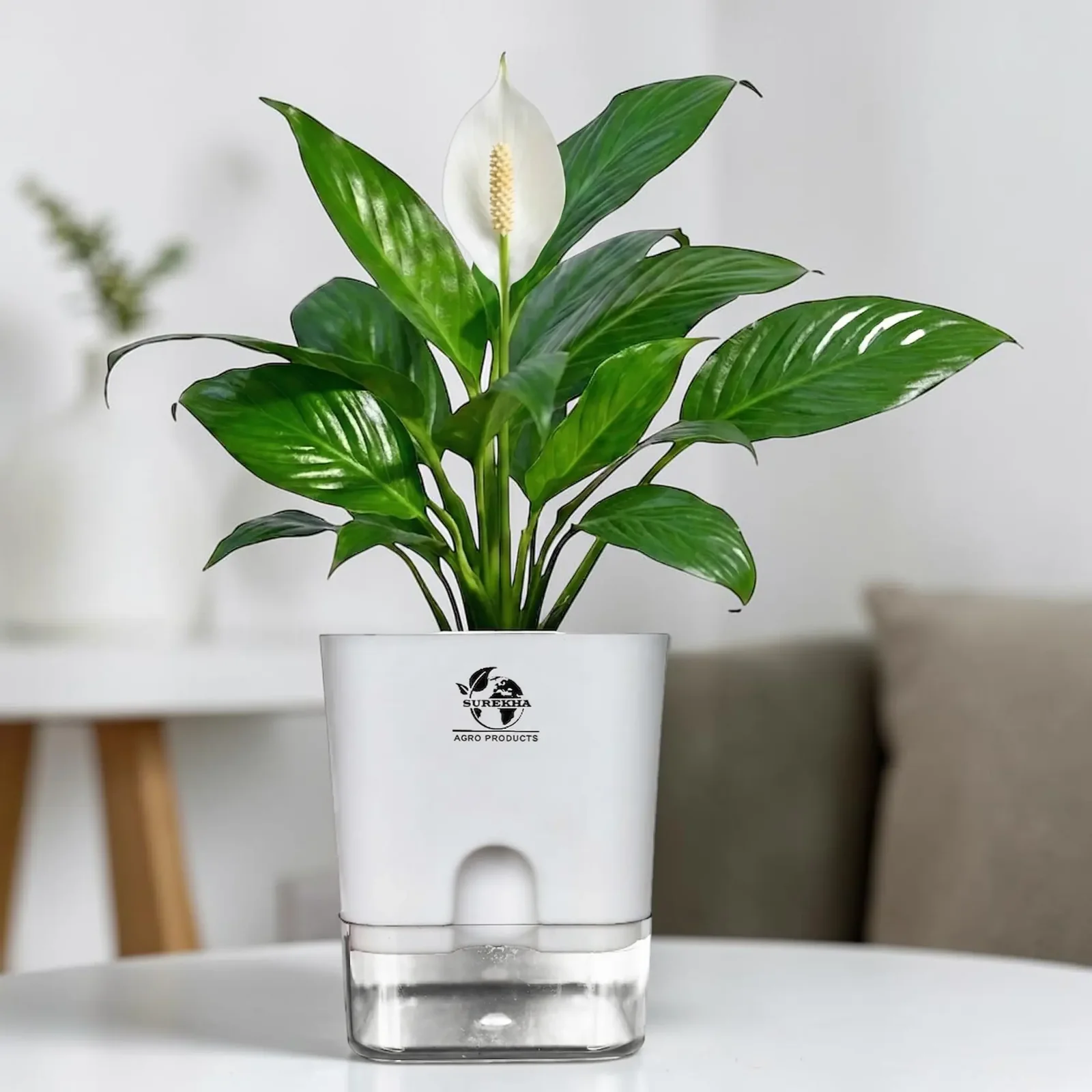
Peace lily care at a glance
- Light: Bright daylight through a sheer curtain, or a bright spot to the side of a window.
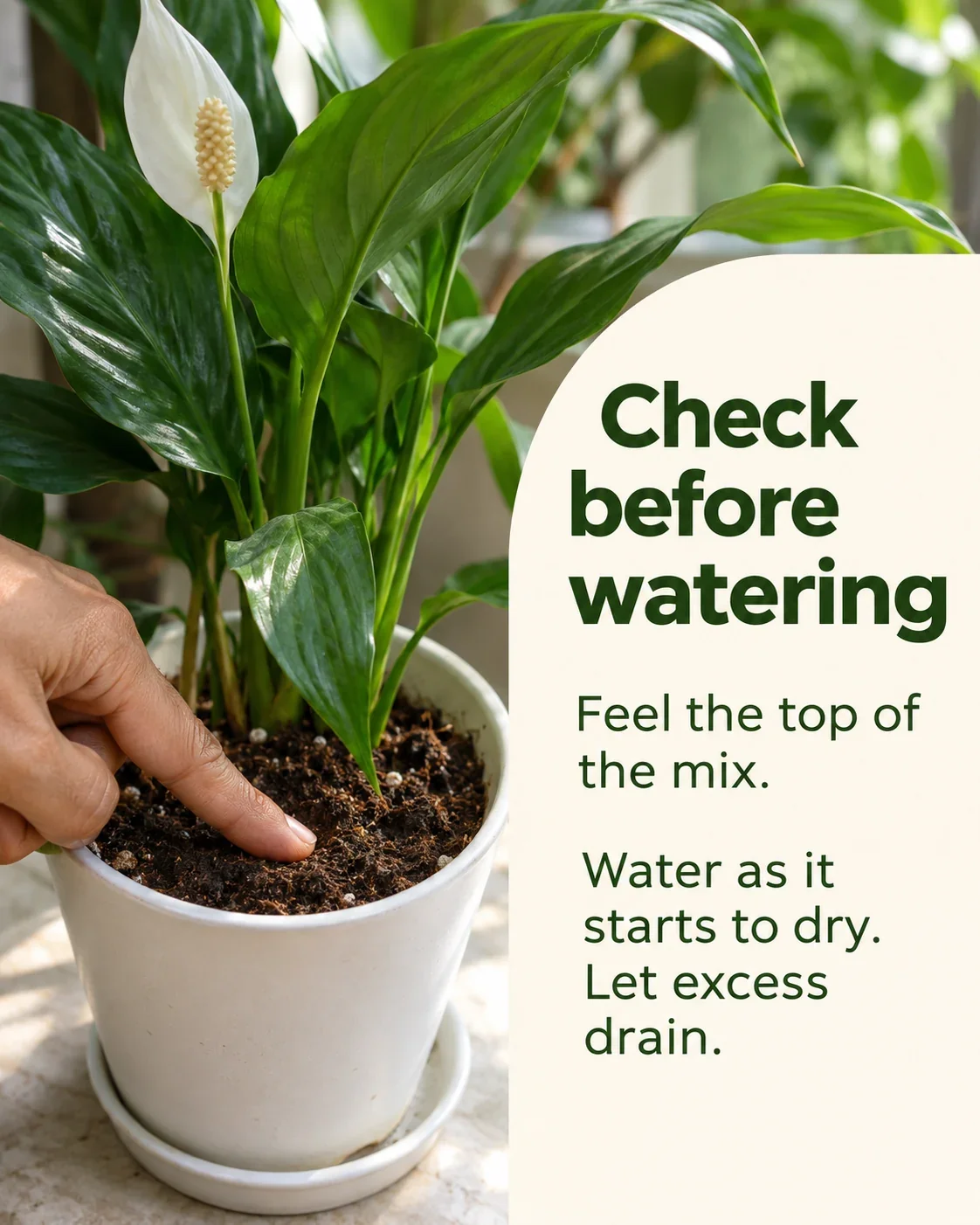
- Water: Check the top of the mix and the weight of the pot. Water as the surface starts to dry, then drain.
- Pot and mix: A pot with drainage and an airy houseplant mix. Move up one size when the roots crowd the pot.
- Feeding: Feed sparingly when new leaves are growing. Check whether the mix already contains fertiliser.
- New plants: Divide a healthy clump into sections, each with leaves and roots attached to its own crown.
What to do when your plant arrives
Choose a plant with firm leaf stalks and a firm base. If you can examine it in person, check under the leaves and between the stalks for sticky spots, cottony clusters or insects. If it comes in a sleeve, remove the packaging, check the mix and let the plant settle in a bright spot away from your other plants while you watch for pests. A plant that arrives with leaves only can still be a good choice. If you want an open spathe straight away, check the plant in front of you.
If you already have a decorative pot, choose a grow pot that you can lift out and drain. When ordering the Surekha peace lily, check the selected pot option. The grow pot and decorative planter options have different watering setups. If the nursery pot drains and the roots still have room, keep it while the plant settles. Illinois Extension’s houseplant guide explains how to inspect a new plant and choose its next pot.
Where should a peace lily sit indoors?
Start near a window where the leaves receive daylight and stay out of hard afternoon sun. Stand at leaf height when the room is brightest. If direct sun hits the leaves or the glass feels hot, move the pot to the side or draw a sheer curtain. In a room shaded by another building, try the brighter end of the window before settling on a table deeper in the room. Peace lilies can tolerate some shade, but growth usually slows and flowering becomes less likely as light falls. The RHS guide describes the light and warmth they prefer.
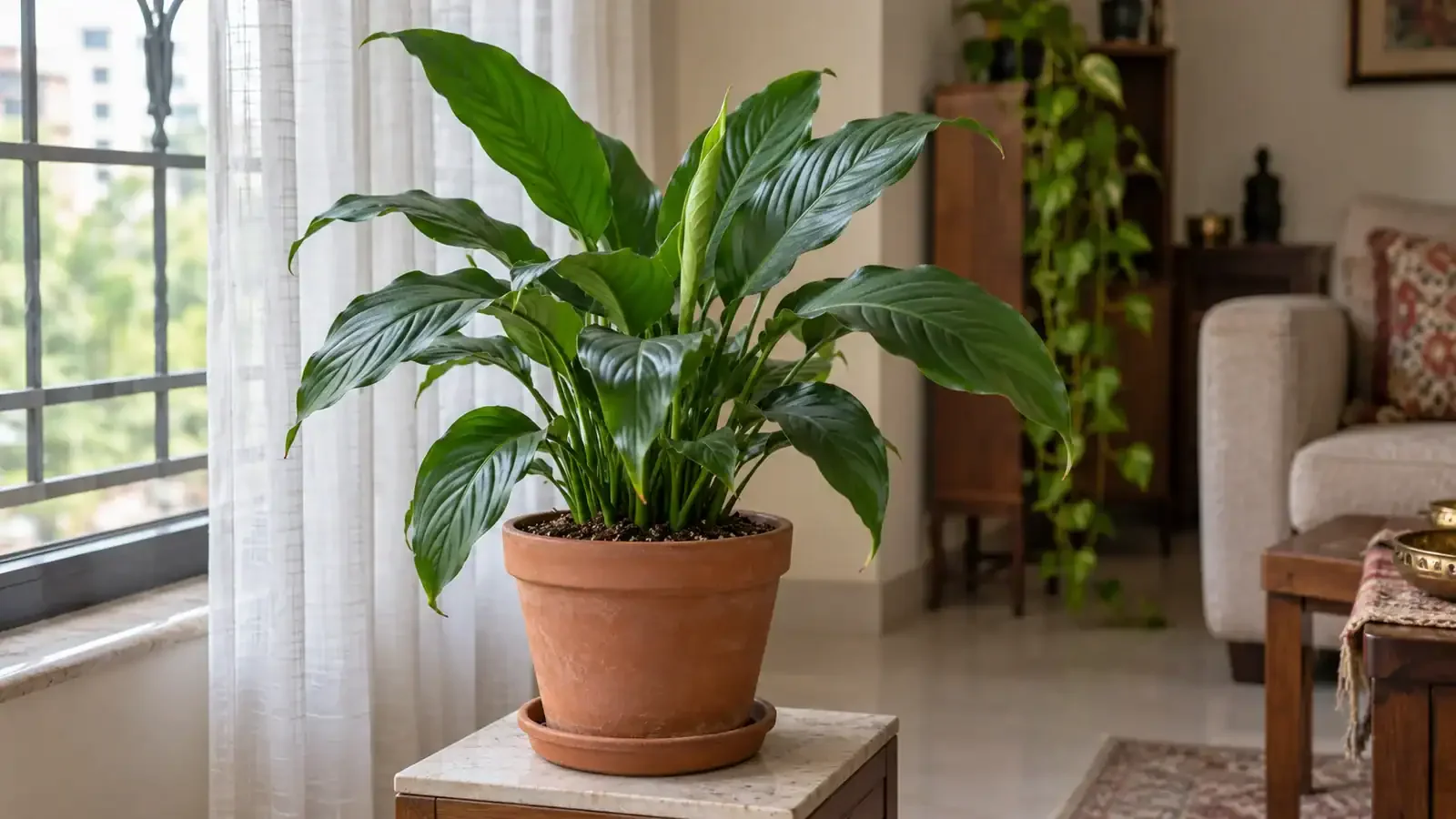
- Hot afternoon windows and air-conditioned rooms: Move the pot out of the sunbeam and the path of the AC vent. Check the mix more often during hot, dry spells and water according to what you find.
- Humid monsoon rooms: Give the leaves room for air to circulate. Cloudy days can slow drying. Lift the grow pot out of its cover after watering and check for pooled water.
- Cold or foggy winter mornings: Keep the plant in the brightest sheltered part of the room, away from cold glass and draughts. Clemson recommends avoiding prolonged exposure to temperatures below about 16°C (60°F). Check the mix before watering, especially when new growth has slowed. Clemson Extension’s temperature guidance.
How do you water a peace lily?
- Check the mix and the weight. Feel the top layer and lift the pot. If the surface has started to dry and the pot is lighter than it was after watering, it is time to water. If the top looks dry but the pot still feels heavy, check just below the surface before adding water.
- Water the whole root ball. Use room-temperature water. Pour slowly over the mix until water runs from the holes. If it rushes down one side and the centre stays dry, let the first pass soak in and water slowly again.
- Let the pot drain. Empty the saucer or decorative outer pot before putting the nursery pot back. With a wick-and-reservoir planter, follow its fill line and check the mix before refilling. If it stays wet, pause the refill and check the wick and drainage. See the self-watering pot guide for setup.
For the first week or two, check the pot at about the same time each day. You’ll learn how it feels after watering and how quickly it dries in that spot. Adjust when the weather or the room changes. University of Maryland Extension’s indoor watering guide.
When should you repot?
Slip the plant partway out when the mix is lightly moist if it dries unusually fast or roots are crowding the surface or drainage holes. Look for a dense mat circling the sides and base. If most of the mix is still visible and the pot dries at a manageable pace, give it more time. When it is ready, choose a pot about 2.5–5 cm (1–2 in) wider across the top. For example, a peace lily crowded in a 12 cm pot can move to a 15 cm pot with drainage holes. Clemson Extension recommends a small step up in pot size.
- Set out the clean pot, fresh houseplant mix and gloves. Choose a mix that holds some moisture and drains readily. A houseplant mix containing coir or peat and a coarse component such as perlite is one option.
- Ease the root ball out, supporting it from below. Loosen only the tight outer coils you can tease apart without tearing healthy roots.
- Set the crown, where the leaf stalks meet the roots, at the same level as before. Fill around the roots, leave space below the rim for watering, then water once and drain.
- Return the plant to filtered light. Let the surface begin to dry before watering again. Wait for steady new growth before restarting any optional feed.
If you’re new to handling a root ball, see how to repot an indoor plant.
How to divide a mature peace lily
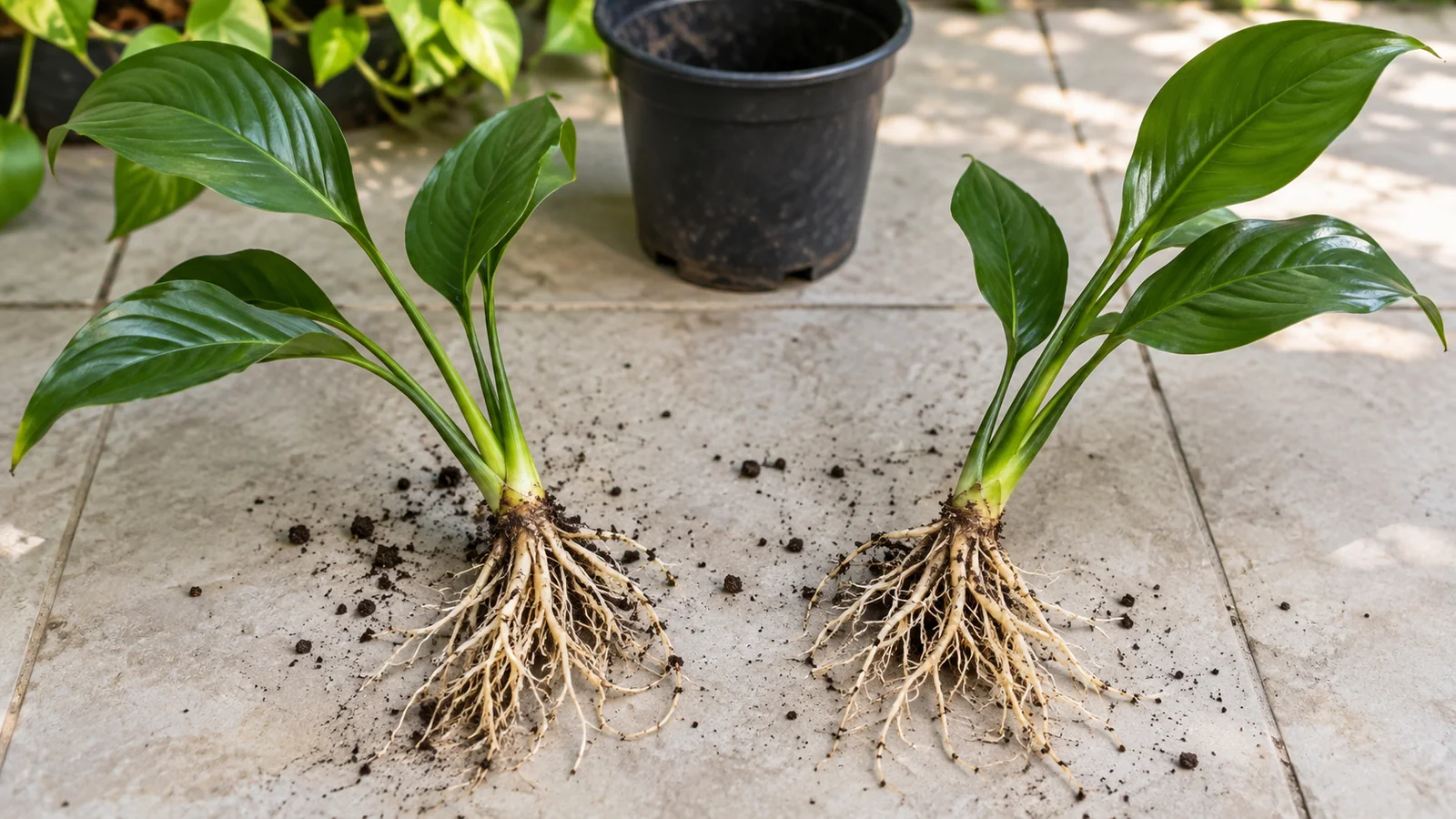
Choose a healthy, actively growing plant with more than one obvious crown. Have small pots with drainage, lightly moistened mix, gloves and a clean blade ready. A single leaf with its stalk lacks the growing crown you need. University of Nevada Extension explains division for multi-crown houseplants.
- Slide the clump from its pot and look for separate fans of leaves meeting the root mass. Loosen enough mix to see where two crowns join.
- Gently work them apart along the natural join. If the join resists, use the clean blade where needed, keeping roots and several leaves attached to each crown.
- Pot each piece at its original depth in a container that fits its roots. Water and drain it. Keep the mix lightly moist as it settles and check for firm leaves and new growth before resuming ordinary feeding.
Feeding, cleaning and faded flowers
Wipe dusty leaves with a soft damp cloth while supporting each leaf with your hand. When the plant is making new leaves, check the potting mix label before adding a balanced houseplant feed and follow the product directions. Peace lilies need little fertiliser. If the plant is settling, wilting or growing slowly in cool weather, deal with those conditions before feeding. See the leaf-cleaning guide.
A white spathe can turn green as it ages. When it dries or browns, wear gloves and use clean snips to remove the stalk near the base without cutting neighbouring leaves. If an otherwise healthy plant has gone a long time without new spathes, start with light and maturity. The peace lily flowering guide walks through the possible causes.
What to check when the leaves change
- Drooping with a light, dry pot: Water thoroughly, let it drain and check again later that day. If the plant wilts again soon, check whether the root ball is wet through or packed with roots.
- Drooping or several yellow leaves with a heavy, wet pot: Empty standing water and check the drainage holes. If wilting persists or a sour smell develops, slide the plant out and inspect the roots. Soft, dark roots or a soft crown suggest rot. Isolate the plant and use University of Maryland Extension’s root rot guide to assess the damage.
- Dry brown tips on new leaves: Check for repeated drying, direct afternoon sun, a nearby AC vent, and a white crust on the mix or rim. Change the factor you can verify. If mineral buildup is likely and drainage is sound, use lower-mineral water and review your fertiliser routine. Judge the change on new leaves. Maryland Extension explains salt deposits.
- Sticky leaves or cottony clusters: Inspect the undersides and stalk bases. If you find mealybugs, move the plant away from others, wipe off visible insects and check the same spots again over the next week. NC State Extension identifies common peace lily pests.
Can a peace lily go in a bedroom?
Yes, if the room has filtered daylight and the plant is clear of cold drafts or AC. Choose its position with children and pets in mind. Chewing peace lily tissue can irritate the mouth because it contains calcium oxalate crystals. Keep it out of reach and contact a veterinarian if you suspect a pet chewed it. ASPCA toxicity profile.