You have found a lovely place for your lucky bamboo on the desk, but now comes the less obvious question: should you top up its bowl, change the water, or treat it like a potted plant? Start by looking beneath the decorative stones. Knowing what surrounds the roots makes the rest of its care much simpler.
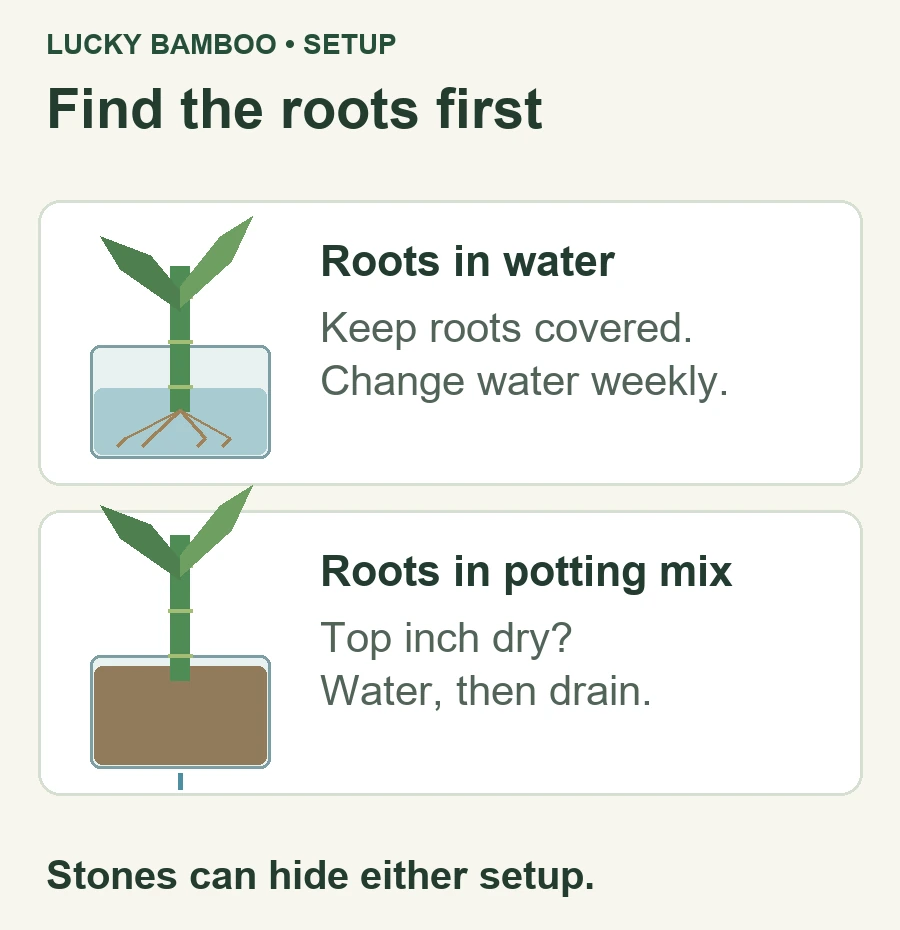
Lucky bamboo plant care in India starts with bright, indirect light and the right watering method for its container. For a water-grown arrangement, keep the roots covered and replace the water weekly. For a plant in potting mix, check moisture before watering and let excess water drain away.
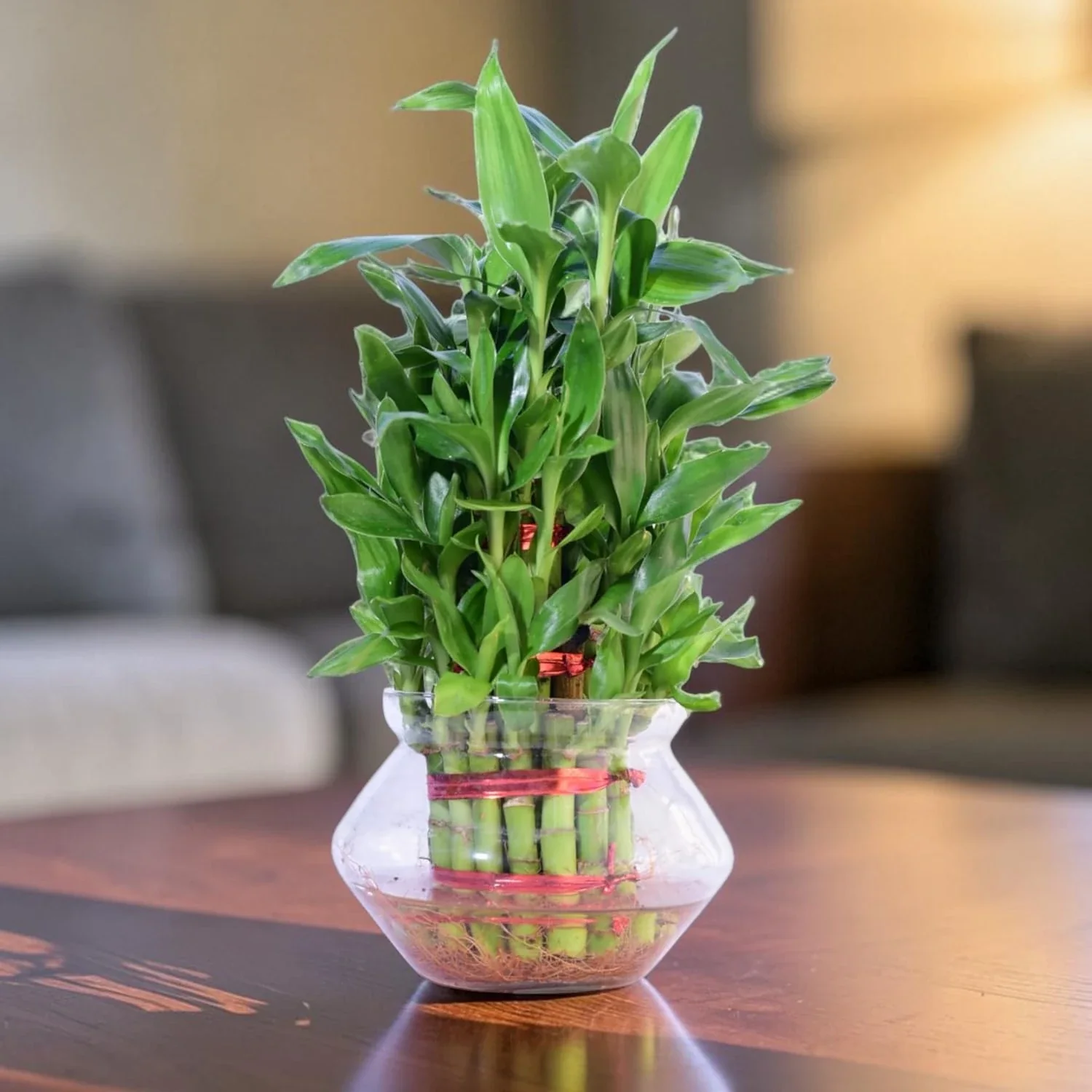
First, is your lucky bamboo in water or soil?
Lucky bamboo is Dracaena sanderiana, a tropical houseplant rather than a true bamboo. It can grow in water or moist potting mix, as NC State Extension explains. The number of tiers or tied canes does not tell you which setup you have.
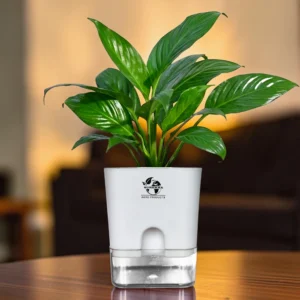
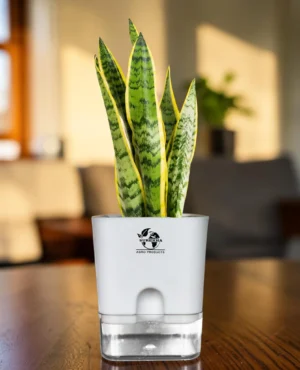
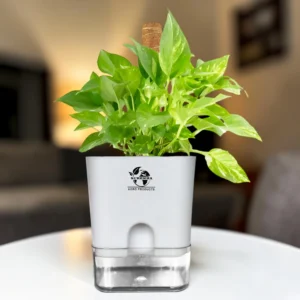
Gently look between the stones without pulling the stems apart. A vase with exposed roots and water needs regular water changes. A nursery pot filled with mix needs a moisture check and open drainage. A water reservoir underneath a soil pot is a third arrangement: follow its wick and refill instructions, rather than filling the entire pot like a vase. Our self-watering pot guide explains that distinction.
Give it a bright place without hot direct sun
A shelf beside a bright window is a useful starting point. Avoid a position where strong afternoon rays fall directly on the leaves. Check the spot during the hottest part of the day; an apparently sheltered desk can receive a sharp beam of sun later. NC State recommends bright, indirect light indoors.
Make the plant easy to reach, too. If you have to move three ornaments to inspect the bowl, it is an awkward everyday location. Leave enough space to lift the arrangement safely and wipe up spills. In an office, choose a place away from the direct blast of an air conditioner.
How to care for lucky bamboo in water
Use enough water to cover all the roots, with roughly another inch (2.5 cm) above them; keep the leafy shoots above the water. The New York Botanical Garden’s care advice recommends distilled or rainwater and cleaning the vase during complete water changes. Distilled water is a straightforward choice when the quality of your tap water is uncertain.
- Look at the level between changes. Top up before the roots become exposed.
- Replace the water weekly. Do not keep adding fresh water to the same old bowl indefinitely. NC State also recommends weekly changes to help prevent mosquitoes.
- Clean gently. Support the canes, empty the vase and rinse away accumulated debris. Avoid tearing tangled roots just to make them look tidy.
Put a small reminder near your watering supplies for the weekly change. Keep the separate top-up decision tied to the actual water level, especially during warm weather.
What if it is planted in potting mix?
Use a well-drained indoor-plant mix and a pot with drainage holes. Clemson Extension advises watering when the top inch of mix is dry, letting the pot drain thoroughly and emptying the saucer. Lift aside a few decorative stones to reach the mix; their dry surface does not tell you whether the roots are wet. Our indoor watering guide offers more help with checking moisture.
Adjust to the room and the Indian season
Use the conditions around the plant rather than a nationwide watering calendar. Light, temperature, humidity, pot size and the growing medium all affect watering frequency, according to Illinois Extension.
| Conditions at home | Useful adjustment |
|---|---|
| Hot, dry days in the plains or a warm office | Check vase levels more often. Keep the arrangement away from a hot pane of glass. |
| Humid, cloudy spells or a rainy coastal season | Check the potting mix before watering again. Keep the regular vase-cleaning routine. |
| Cool northern nights or a chilly hill home | Move away from cold draughts and windows that are left open overnight. |
| Mild southern winter | Continue checking the actual mix or water level; do not copy a northern winter interval. |
These are practical adjustments, not regional watering deadlines. NYBG also advises avoiding very hot or cold conditions and heating or cooling vents.
Yellow leaves: check the setup before adding feed
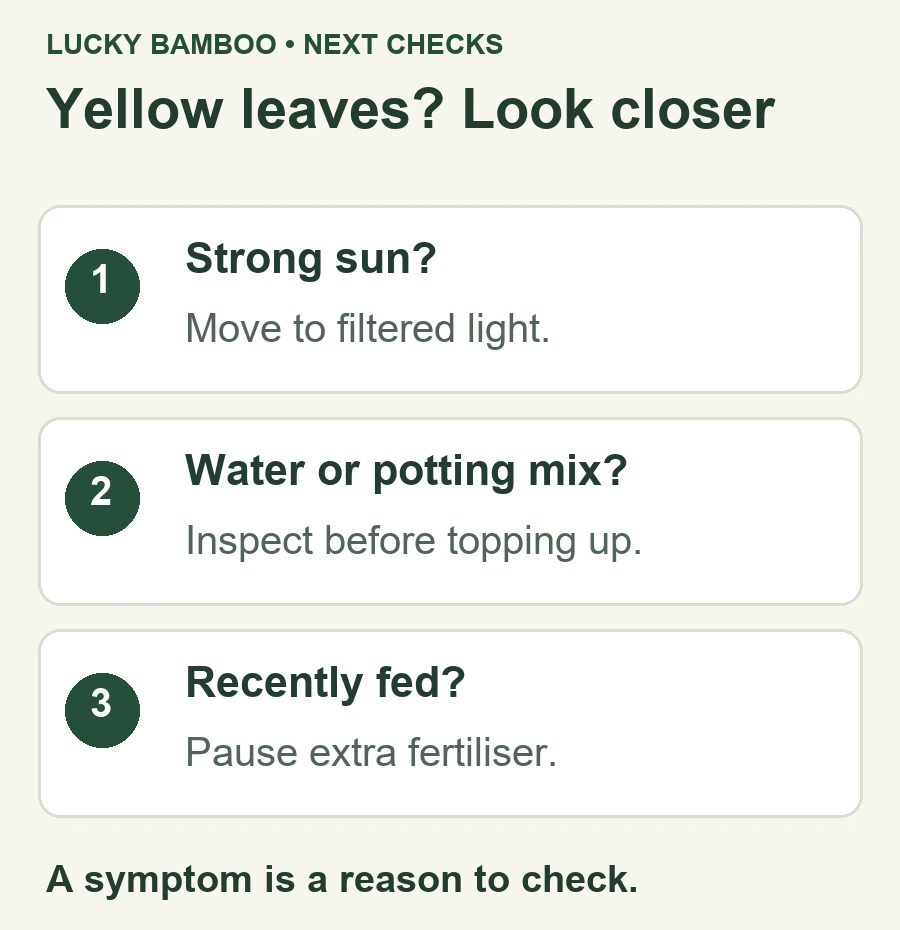
A yellow leaf is a prompt to investigate. UF/IFAS Extension identifies water quality and excessive direct sun as possible causes. NC State also notes that overwatering can lead to yellow leaves and rotting stems.
Check the light, smell and appearance of the water, moisture in any potting mix, and what fertiliser was added recently. A soft, deteriorating cane needs attention to the stem and roots rather than another dose of plant food. NYBG advises removing a yellow stalk from a shared water container and changing the water. Several causes can overlap, so a leaf colour alone does not establish a diagnosis.
Keep feeding light, and propagate a healthy shoot
Water-grown plants need nutrients, but a crowded bowl is no place to experiment with strong mixtures. NYBG recommends water-soluble fertiliser at quarter strength or weaker, no more than monthly. Follow the product’s applicable dilution instructions and avoid adding multiple boosters together. For soil-grown plants, Clemson recommends houseplant fertiliser during the growing season.
If you want another plant, use a healthy shoot. Clemson describes cutting a new shoot from the main cane, removing its lowest leaves and placing the shoot in water. Keep leaves above the water and give the cutting indirect light. New roots take time; do not promise a gift recipient a particular rooting date.
A useful plant gift starts with a simple care note
For a desk or housewarming present, the Surekha three-layer lucky bamboo is currently listed in a glass pot. Check the live listing for its current size and availability. Add a note saying whether it is water-grown and where to place it; that is more useful than just “water regularly”.
Keep lucky bamboo where pets cannot chew it: NC State lists it as toxic to cats and dogs. Choose an accessible, stable place with the right light, then make the water or moisture check part of your normal plant round.
Two questions new owners often ask
Does lucky bamboo need soil?
It can grow in water or potting mix. Identify the existing setup first; a plant growing well does not need an immediate change just because you have seen a different arrangement online.
Is a three-layer plant watered differently?
The tiers describe the arrangement. Care still follows what surrounds the roots. In a water-grown bowl, check that the whole root group stays covered; in a soil pot, use the mix and drainage to guide watering.