An areca palm can make the space beside a window feel softer without taking over the whole room. The awkward part comes later: a few tips turn brown, and suddenly every watering feels like a guess. Before changing everything, get to know two things—the light reaching the leaves and the moisture still inside the pot.
Areca palm care in Indian homes starts with bright, indirect light and a root zone that stays lightly moist during active growth, with excess water able to escape. Let the surface begin to dry before watering again, especially in cooler weather. Protect the foliage from harsh sun and direct air blasts. These principles follow NC State’s areca profile and the RHS indoor-palm guide.
Where will an areca palm grow comfortably?
Give it a bright window-side position where daylight reaches the foliage without a fierce beam of sun. A sheltered balcony can work too, provided the plant is protected from sudden exposure, strong wind and prolonged rain into an already wet pot. The RHS distinguishes areca from palms that tolerate dimmer rooms: it needs good light, and strong sun through glass can scorch indoor palm leaves.
Look at the proposed spot in the morning and afternoon. A curtain can filter a hot sunbeam; a neighbouring building may already shade the window heavily. Judge the actual light at leaf level. Avoid wedging the pot into a dark gap behind the sofa simply because there is floor space.
Nurseries commonly use the name Dypsis lutescens; NC State now lists it as Chrysalidocarpus lutescens. It is a clustering palm with arching foliage, so leave room around the plant rather than pressing it against a wall. Source: NC State Plant Toolbox.
How often should you water an areca palm?
Use a regular reminder to check the pot, then let its moisture decide whether to water. Feel the upper mix and gently lift a manageable pot to learn its weight. A moist, heavy pot needs more time; a drying surface and noticeably lighter pot tell you to look more closely. The Iowa State houseplant guide explains these checks and why light, temperature, container and plant size change the watering interval.
- Check before pouring. Keep the root ball from drying right through during active growth, while allowing air back into the mix.
- Water evenly when needed. For an ordinary drainage pot, wet the mix thoroughly and let excess water run out.
- Empty collected drainage water. A decorative outer pot should not leave the inner pot standing in a puddle.
That balance matters more than a rule such as “every three days.” The RHS advises keeping palm compost from drying out in summer, allowing the surface to dry slightly in winter, and avoiding standing water. In India, apply that distinction to your plant’s actual growing conditions rather than copying a British seasonal calendar.
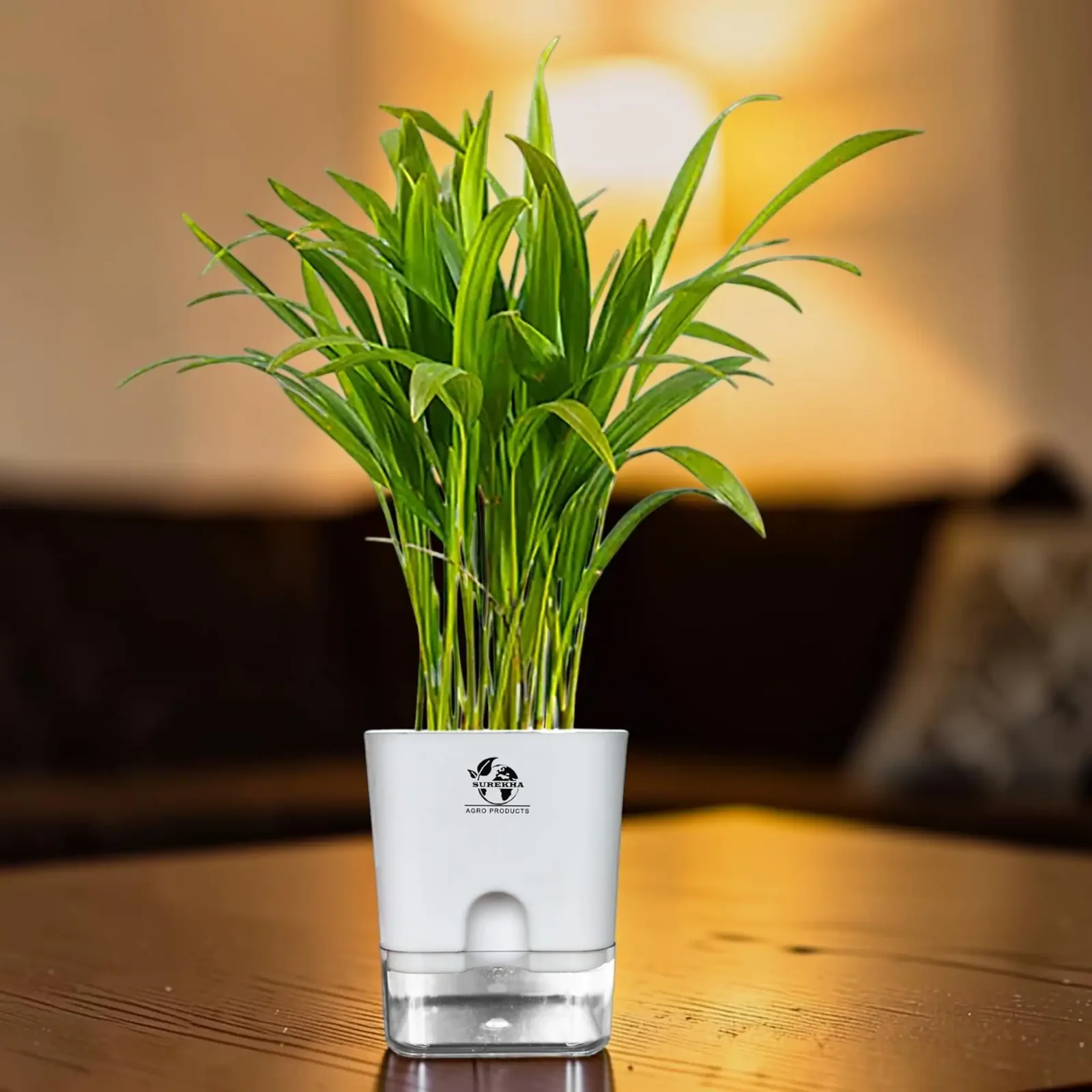
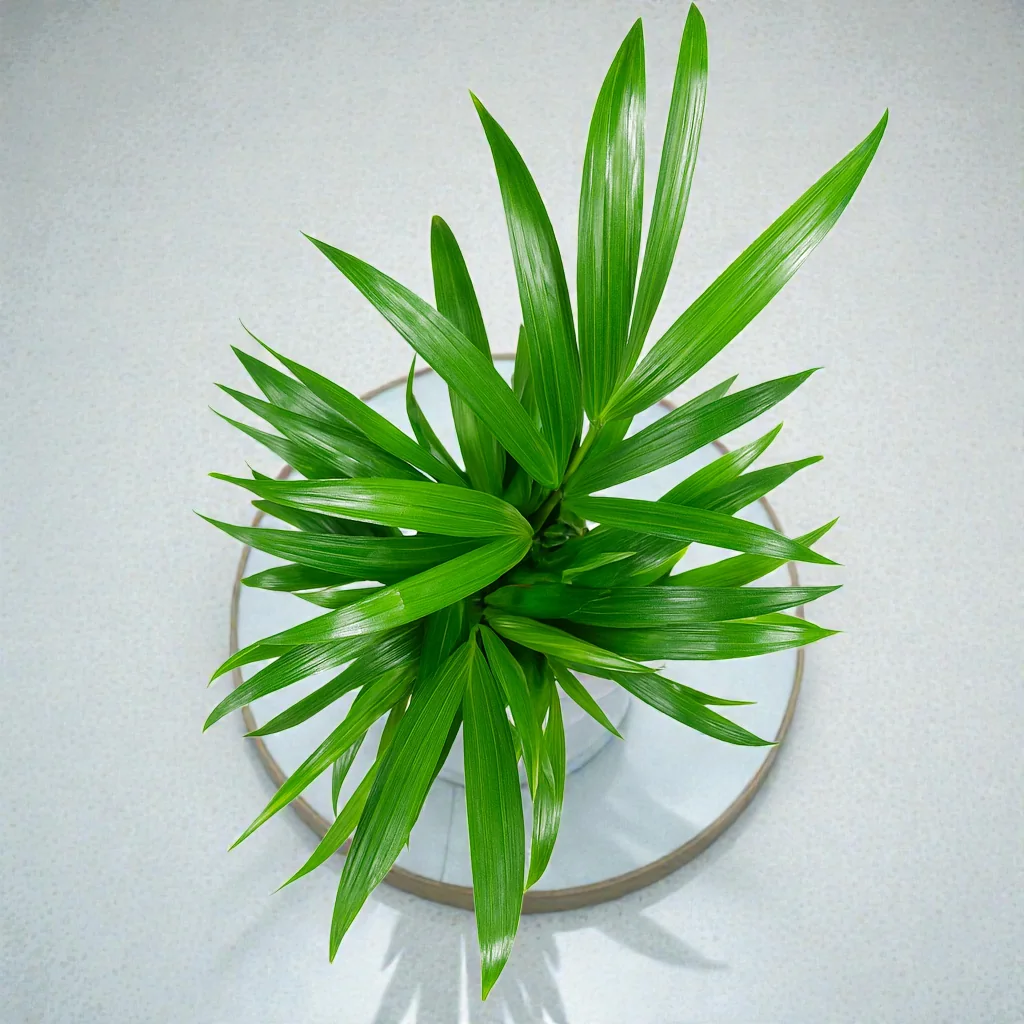
A reservoir planter needs its own check: an empty reservoir can sit beneath mix that is still moist. For the pot shown in Surekha’s product photo, see our self-watering pot setup and refill guide. Check the wick connection, mix and refill instructions together.
Why are the leaf tips turning brown?
Brown tips can follow dry air, prolonged drying between waterings or excess fertiliser salts. A brown edge alone cannot identify which one applies. Start with the pot and recent routine, then look at the room. Iowa State explains these common causes of brown tips.
Use the clues together. A brown tip by itself is not a diagnosis.
If the mix is repeatedly bone dry, improve the timing of moisture checks. If it stays wet, investigate drainage before adding another drink. If you see a white crust on the mix or pot, review both the water source and feeding. Maryland Extension explains how dissolved minerals and fertiliser salts can build up and injure plant tissues. In a freely draining pot, rinsing the mix from above and letting it drain can help; do not flush into a reservoir and leave the runoff beneath the roots. Source: mineral and fertiliser salt deposits.
For dry indoor air, move foliage out of direct AC or heater airflow. A humidifier can help where needed; repeated misting gives only a brief humidity change, so it is a poor substitute for improving the room conditions. Source: Iowa State humidity guidance.
Existing brown tissue will stay brown. You may trim a dead tip for appearance, but keep the green part of the leaf and address the underlying condition. Photograph the plant now and compare later foliage, rather than expecting yesterday’s damaged tip to turn green.
What changes with Indian weather?
A November balcony in Delhi and a warm room in Chennai need different decisions. Treat these as adjustments to local conditions, not a watering timetable.
| Conditions at home | Useful adjustment |
|---|---|
| Cool northern winters or chilly hill nights | Use a bright, sheltered room. Keep away from cold glass and draughts; let moisture checks reflect slower drying. |
| Warm coastal and southern homes | Continue checking active growth and moisture. There is no need to impose a dry winter rest on a warm, growing plant. |
| Rainy spells, including northeast-monsoon weather | Shelter a balcony pot from extra rain when the mix is wet. Check that drainage openings remain clear. |
| Hot, dry weather or prolonged AC use | Check moisture more frequently, filter harsh sun and keep leaves outside the direct air stream. |
For this palm, the RHS advises a winter minimum of about 13°C. Check the overnight temperature where the pot actually stands, especially beside balcony doors. That is a protection threshold, not an ideal target for growth. Source: RHS areca temperature guidance.
A little maintenance goes a long way
Feed when it is growing. Choose a fertiliser suitable for indoor palms or foliage plants and follow the product’s container-plant directions. Account for any feed already in the mix. Avoid stacking supplements in response to one yellow leaf; excess salts are another problem to solve. Maryland’s guidance above explains why label rates matter.
Keep the foliage accessible. A gentle rinse or careful wipe can remove normal dust; support delicate leaves as you work. Our indoor leaf-cleaning guide covers handling and residue checks. Look underneath leaves and around stem joints too: NC State lists scale, whiteflies and spider mites among areca pests. Identify what you find before choosing a treatment.
Repot for a reason. Look for crowded roots or deteriorating drainage. Move into a modestly larger drainage pot with a suitable houseplant mix, rather than a huge container of dense garden soil. For the basic process, follow our beginner repotting guide. Choose a warm growing period when you can watch the plant afterwards.
Quick answers before you reach for the scissors
Should I remove a whole frond because its tips are brown?
Keep useful green foliage. Trim only dead tissue for appearance, and remove a fully dead frond carefully. UF/IFAS warns against removing healthy green palm fronds. Source: pruning palms.
Can I cut the top off to make the palm shorter?
No. Palms grow from their growing points and cannot be shortened like a branching shrub. Choose a different position if height becomes a problem. Clemson’s indoor-palm guidance explains this pruning limit.
Is a self-watering pot enough to take care of it?
It changes how you supply water; you still need suitable light, a working wick and moisture checks. If you have a bright place ready, explore Surekha’s areca palm and check its current size and pot details. Start with a position you can reach easily, then learn how that particular pot dries.