If you’ve admired the tall, sword-like leaves of a snake plant in a room’s corner, you may have wondered if you could grow more. Snake plant propagation is rewarding and simple. Any plant lover can try it. Whether you are a beginner or an experienced gardener, you have several propagation methods suited to any skill level or patience.
In this guide, you will learn when to propagate, which method to use, how to make the right cut, what growing conditions to provide, and how to care for new plants. By the end, you will have the confidence to turn one snake plant into many.
Why Propagate Your Snake Plant?
Before the how, consider the why. Snake plant propagation is practical and economical for several reasons.
First, snake plants are expensive, especially larger specimens. Growing from your own plant costs almost nothing. Second, if your plant is root-bound or overcrowded, propagation gives both the parent and new divisions room to thrive. Third, propagated snake plants make thoughtful gifts—giving someone a plant you grew yourself is meaningful. Finally, propagation is a deeply satisfying skill—watching roots grow from a leaf cutting in water never gets old.
When To Propagate a Snake Plant
Timing is important for propagation success. The best time to propagate a snake plant is spring and early summer, when the plant enters its active growth phase. During these months, the plant directs energy toward new growth. Cuttings and divisions root faster and are less likely to fail.
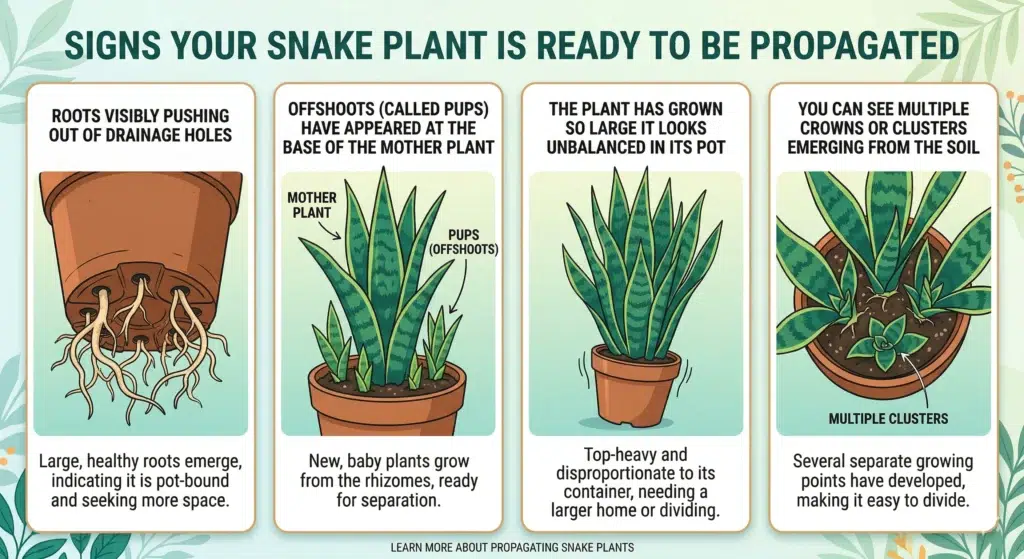
Signs your snake plant is ready to be propagated:
- The roots are visibly pushing out of the drainage holes.
- Offshoots (called pups) have appeared at the base of the mother plant.
- The plant has grown so large it looks unbalanced in its pot.
- You can see multiple crowns or clusters emerging from the soil.
Do not propagate in autumn or winter. The snake plant becomes semi-dormant, and its slower metabolism means cuttings take much longer to root, if they do at all. If you must propagate in winter, use a heat mat and grow light to boost energy.
Light Requirements for Propagation Success
Light is key to snake plant propagation. New cuttings and divisions are vulnerable, lacking roots to absorb water and nutrients, so they cannot tolerate intense sunlight.
Bright, indirect light is best for propagating snake plants. An east- or north-facing windowsill works well. This encourages root growth without risking dehydration or leaf burn from afternoon sun.
Avoid placing cuttings:
- In dark corners (roots develop too slowly)
- On south or west-facing windowsills in summer (too much direct sun)
- Under ventilation units that dry out the air quickly
If your space has little natural light, use a grow light. Place it 6–12 inches above the cuttings for 12–14 hours a day. When roots are established, and you see new growth, move the plants to brighter conditions over a couple of weeks.
Propagation Methods: The Different Ways to Propagate a Snake Plant
This is the main part of snake plant propagation. There are five main methods; each offers different strengths. Read about all methods and choose the one that fits your goals and setup.
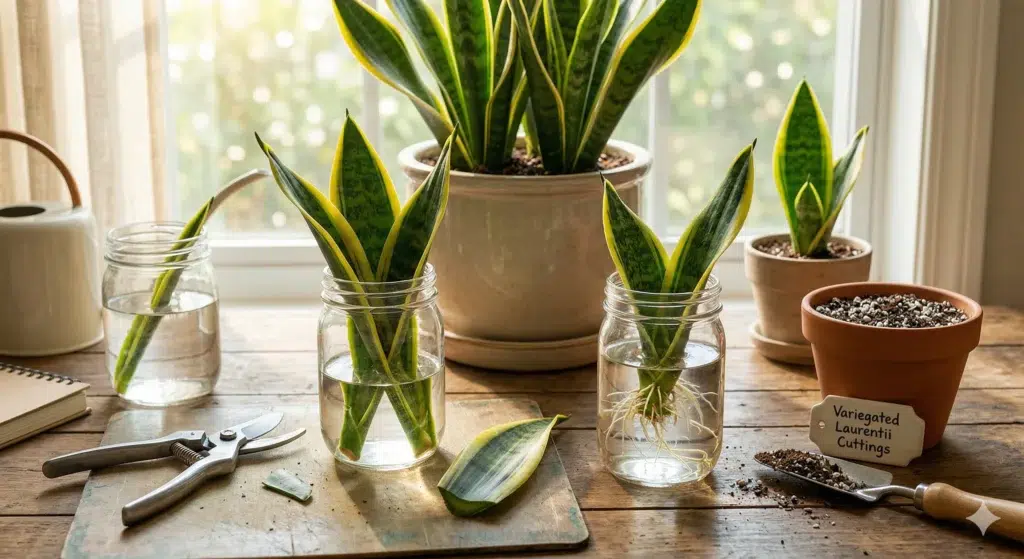
1. Leaf Cutting in Water (Water Propagation)
Water propagation is the most popular method for beginners. It lets you watch roots develop, which is satisfying. You can also spot any issues early.
Steps:
- Select a healthy, mature leaf from your snake plant. Make sure to avoid old, yellowing leaves or very young shoots.
- Cut the chosen leaf into 3–4-inch sections. Use clean scissors or a sharp knife for a precise cut.
- Pay attention to polarity. The bottom of each cutting (the end nearest the soil) must point down in the water. If you place it upside down, it will not root.
- Place the cuttings in a clean glass or jar filled with a few inches of room-temperature water. The bottom inch or so of each cutting should be submerged.
- Change the water every 3–5 days. This prevents bacteria and stagnation.
- Keep the glass in bright, indirect light and wait. Roots typically appear within 3–6 weeks.
- Once the roots are 1–2 inches long, carefully transfer the cuttings to well-draining potting mix.
Pros: Easy to monitor, good for beginners, highly visual.
Cons: Variegated varieties lose color when grown from leaf cuttings because the yellow edge is not passed on by this method.
2. Leaf Cutting in Soil (Soil Propagation)
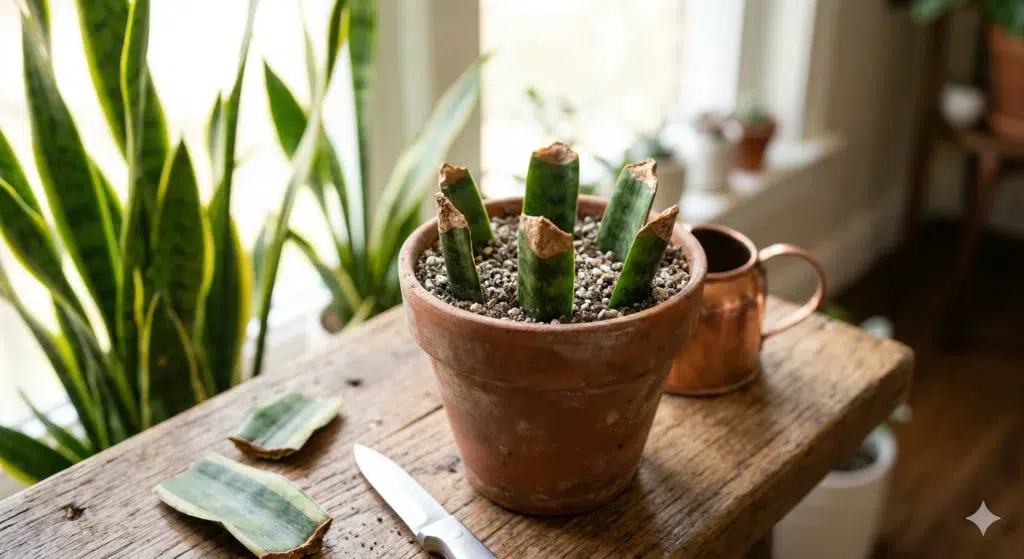
If you like a direct approach, put cuttings straight into the soil. This skips the water-to-soil step, reducing transplant shock.
Steps:
- Cut a healthy leaf into 3–4-inch sections, again respecting polarity (the bottom end goes into the soil).
- Let the cut ends callous for 1–2 days in open air. This seals the wound and lowers the chance of rotting.
- Fill a small pot with well-draining potting mix — a cactus or succulent mix works perfectly.
- Push the bottom end of each section about an inch into the soil, ensuring the correct end goes into the mix for rooting.
- Lightly water the soil. Keep the pot in bright, indirect light.
- Water sparingly going forward — the soil should dry out almost completely between waterings.
- After 4–6 weeks, gently tug the cutting. If it resists, roots have formed.
Pros: Roots adapt to soil, minimizing shock; no extra containers needed.
Cons: Root progress is hidden; it’s harder to know if the cutting has taken.
3. Division
Division is the fastest way to propagate. It is the only method that keeps the variegation of yellow-edged snake plants.
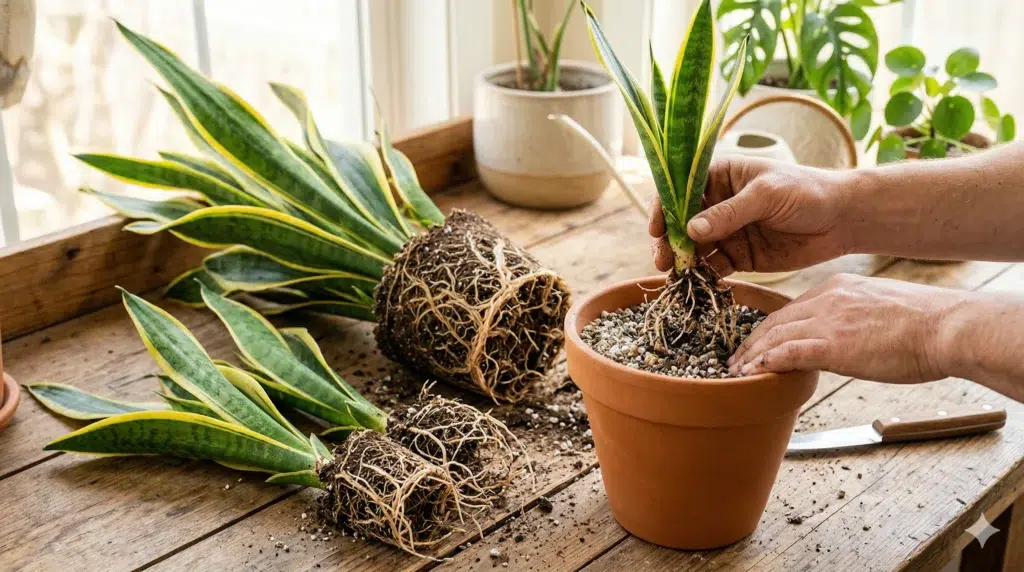
Separate a mature plant into two or more independent plants, each with roots.
Steps:
- Remove the entire mother plant from its pot and lay it on a flat surface.
- Gently shake or brush away excess soil to expose the root ball.
- Find places where clusters of leaves emerge from the roots. These are natural separation points.
- Use a sharp, clean knife or your hands to split the root clusters. Ensure each piece has healthy roots and at least 2–3 leaves attached.
- Pot each division in its own container filled with fresh, well-draining potting mix.
- Water lightly and keep in bright, indirect light while the divisions recover.
Pros: Fastest way to get a full-size plant; keeps variegation.
Cons: Needs a mature plant with multiple crowns.
4. Rhizome Propagation
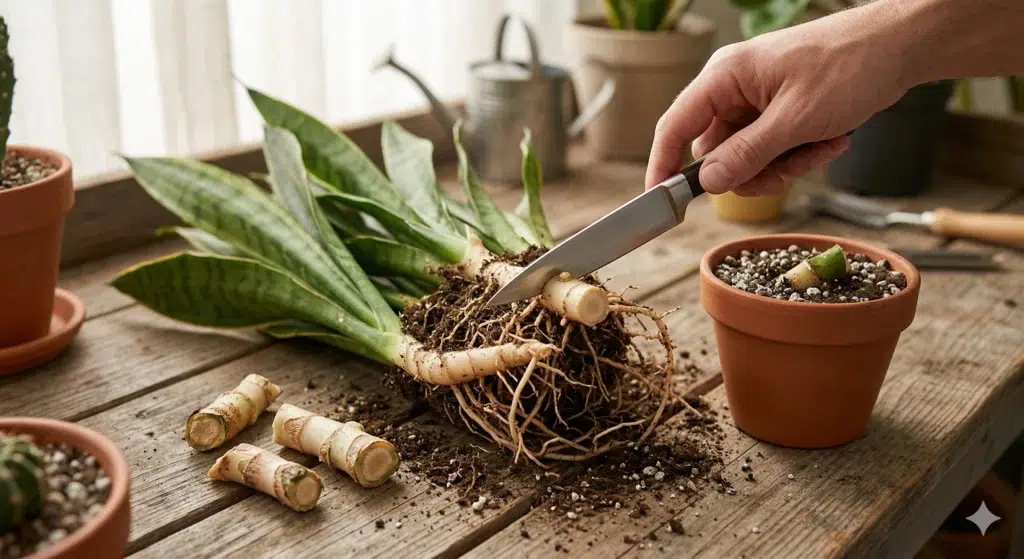
Rhizomes are the underground stems of snake plants. Propagating with rhizomes is less known but very reliable.
Steps:
- Unpot the snake plant and carefully examine the root system.
- Find the rhizomes. They look like pale, fleshy, horizontal structures that connect root clusters.
- Take a sterile knife and cut sections at least 2 inches long. Each section should have one node (a small bump where new growth will emerge).
- Allow the cut ends to dry and callous for 24 hours.
- Plant each rhizome section just below the surface of moist, well-draining soil.
- Keep the rhizome sections warm and in indirect light. New shoots usually show in 3–8 weeks.
Pros: Highly reliable; offspring match the parent.
Cons: You have to unpot the plant, and the method can be less clear for new gardeners.
5. Pup (Offset) Propagation
Pups are baby snake plants that naturally emerge from the base of a healthy mother plant, connected by a shared rhizome. Separating and potting pups is the easiest and most foolproof method, with the highest success rate.
Steps:
- Wait until each pup is 3–4 inches tall before separating. Smaller pups may not have enough roots and will not thrive if separated too early.
- Remove the mother plant from its pot.
- Locate the rhizome connecting the mother plant to each pup.
- Use a sterile knife to cut through the rhizome. Make sure the pup keeps some roots.
- Pot the pup in its own container with fresh potting mix.
- Water lightly and keep in indirect light.
Pros: Highest rate of success. Pups are already partly grown and have roots.
Cons: You must wait for pups to appear, which can take months for a young plant.
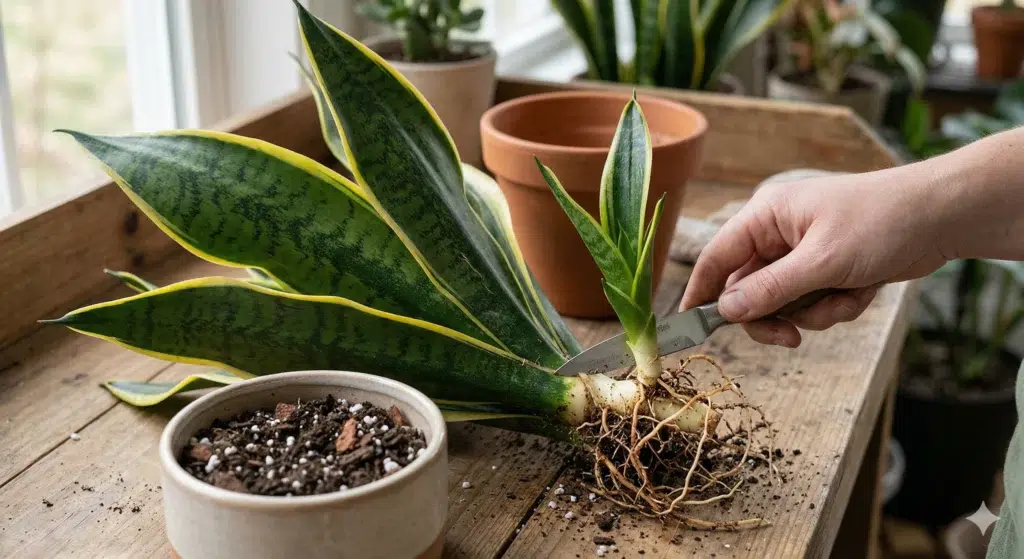
Cutting Techniques: Getting the Cut Right
Whatever method you pick, your cut affects the outcome. Always use sharp, clean scissors or a knife. Blunt tools crush the plant and leave ragged edges, which are more likely to get infected or rot.
Sterilise your tools by wiping with rubbing alcohol or a diluted bleach solution (one part bleach to nine parts water) before and after each cut. This prevents the spread of diseases between plants.
The polarity rule is perhaps the most important technique tip of all. Every leaf cutting must be planted or placed in water with the base (the cut end closest to the original soil line) facing downward. Snake plant cells are directional — root hormones move from tip to base, and placing a cutting upside down will prevent any rooting from occurring, no matter how long you wait.
For soil propagation, try the V-cut technique: cut the bottom of each section into a shallow V-shape. This increases the surface area exposed to the rooting medium and can accelerate root development noticeably
Propagating Steps: Quick-Reference Summary
To bring all the methods together, here is a universal framework you can apply regardless of which technique you choose:
- Choose a healthy, well-watered mother plant a day or two before you plan to propagate.
- Select your preferred propagation method based on your goals and resources.
- Sterilise your tools and prepare your rooting medium (water, soil, or cactus mix).
- Take cuttings or complete your division, respecting polarity at every stage.
- Allow cut surfaces to callous for 1–2 days if planting in soil.
- Plant in soil or place in water, ensuring proper orientation.
- Provide bright, indirect light and appropriate warmth.
- Monitor regularly and exercise patience — rooting takes weeks, not days.
Growing Tips for Healthy Snake Plant Propagation
A few key practices will dramatically improve your success rate and the long-term health of your new plants.
Use the right soil. A well-draining sandy mix or a commercial cactus-and-succulent blend is ideal. Standard potting soil retains too much moisture, which can lead to root rot in snake plants.
Never overwater. This is the single most common cause of propagation failure. New cuttings without roots cannot absorb water, so excess moisture simply sits in the soil, causing rot. Water sparingly and allow the medium to dry out significantly between waterings.
Maintain warm temperatures. Snake plants root best between 65–85°F (18–29°C). Avoid placing cuttings near cold draughts, air conditioning units, or unheated windowsills in winter.
Hold off on fertiliser. Do not feed your cuttings until they are well established — at least 4–6 weeks after rooting is confirmed. Fertilising too early can burn undeveloped roots.
Use small pots. New cuttings root better when their container is appropriately sized — a pot that’s too large can lead to excess wet soil around the cutting, increasing the risk of rot.
Consider a rooting hormone. While not essential, dipping the base of soil cuttings into powdered or gel rooting hormone can speed up the process by several weeks.
Aftercare: What To Do Once Roots Appear
Successfully rooted cuttings need careful handling as they transition into full independent plants.
For cuttings rooted in water, move them to soil once roots are 1–2 inches long. Fill a small pot with well-draining mix, make a hole in the centre, and gently nestle the roots in without breaking them. Firm the soil lightly and water just enough to settle it around the roots.
For the first few weeks after potting, keep your new plants in the same bright, indirect light they were in during rooting. Do not rush to move them to a brighter spot. Water lightly, allowing the top inch of soil to dry between waterings.
After 4–6 weeks, introduce a diluted liquid fertiliser — approximately half the strength recommended on the label — to support new growth without overwhelming the still-developing root system.

Signs your propagation has succeeded:
- A firm, gentle tug on the plant meets clear resistance.
- New leaf growth is emerging from the centre of the plant
- The plant looks upright and robust rather than droopy or translucent.
Common aftercare mistakes to avoid:
- Watering on a schedule rather than checking soil moisture first
- Moving the plant into direct sun before it has acclimatised
- Repotting too soon — wait until roots are clearly visible at the drainage holes
Common Problems and Troubleshooting
Even with the best preparation, things can go wrong. Here is how to identify and address the most common issues.
Cuttings are rotting: This almost always points to overwatering or skipping the callous step before planting in soil. Remove any rotted sections with a sterile blade, allow the healthy tissue to callous again, and replant in a fresh, dry mix.
No roots after 8+ weeks: Check polarity first — this is the most common culprit. Also, evaluate your light levels and
temperature. Cuttings in dim or cold conditions root very slowly or not at all.
Yellowing leaves on cuttings: Usually caused by too much water or insufficient light. Reduce watering frequency and move the cutting closer to a light source.
Loss of variegation: If yellow-edged varieties are losing their distinctive colouring, switch to division or pup propagation. Leaf cuttings cannot genetically carry the variegation trait.
Conclusion
The snake plant is one of the most forgiving and versatile houseplants to propagate, offering five distinct methods to suit every gardener’s skills, resources, and patience. Whether you choose the visual satisfaction of water propagation, the directness of soil cuttings, the speed of division, the reliability of rhizomes, or the simplicity of separating pups, each approach leads to the same deeply rewarding result: new life grown entirely by your own hands.
Start with the method that feels most comfortable, follow the cutting and aftercare guidelines closely, and remember that patience is the most important ingredient of all. Your snake plant will reward the effort generously — and before long, you may find your home (or your friends’ homes) filling up with these beautiful, architectural plants.
Frequently Asked Questions (FAQs)
It depends on the method. Water propagation typically produces visible roots within 3–6 weeks. Soil cuttings may take 6–8 weeks to confirm rooting. Division and pup separation are the fastest, as those plants already have some root development and can establish within 2–4 weeks.
Yes, absolutely. A single healthy leaf can be cut into multiple sections, and each section has the potential to produce a new plant, provided you respect the polarity of each cutting (base end always faces down).
The yellow margins of variegated snake plants are a trait that cannot be passed through leaf cuttings. Only division and pup separation will produce offspring that retain the parent’s variegation. If maintaining the yellow edges matters to you, always propagate by division or offsets.
No — snake plants can root without any hormone supplement. However, using a rooting hormone (available in powder, gel, or liquid form) can speed up the process by a few weeks, which is helpful if you are propagating in cooler months.
Change the water every 3–5 days. Fresh water prevents bacterial growth and stagnation, both of which can inhibit rooting or cause the cuttings to rot.
It is not ideal, but it is possible. The plant’s slower metabolism in winter means rooting takes significantly longer. If you must propagate in winter, use a heat mat to maintain soil temperature around 70°F (21°C) and supplement with a grow light to provide adequate energy for root development.
The most common reasons are: cuttings placed upside down (polarityerror), insufficient light, temperatures that are too cold, or overwatering, which can cause rot at the base. Review each factormethodically and adjust as needed.
Wait until roots are clearly visible through the drainage holes at the bottom of the pot before repotting into a larger container. Rushing this step can disrupt the plant’s fragile root system and set it back significantly. Typically, this is 3–6 months after successful rooting.
Yes, most tap water works fine. However, if your tap water is heavily chlorinated, let it sit in an open container for 24 hours before using it, or switch to filtered water. Excess chlorine can inhibit root development in some cases.
Pups are ready to separate when they are at least 3–4 inches tall. At this size, they typically have enough of their own root system to survive independently. Separating pups that are too small significantly reduces their survival chances.
Recommended products
-
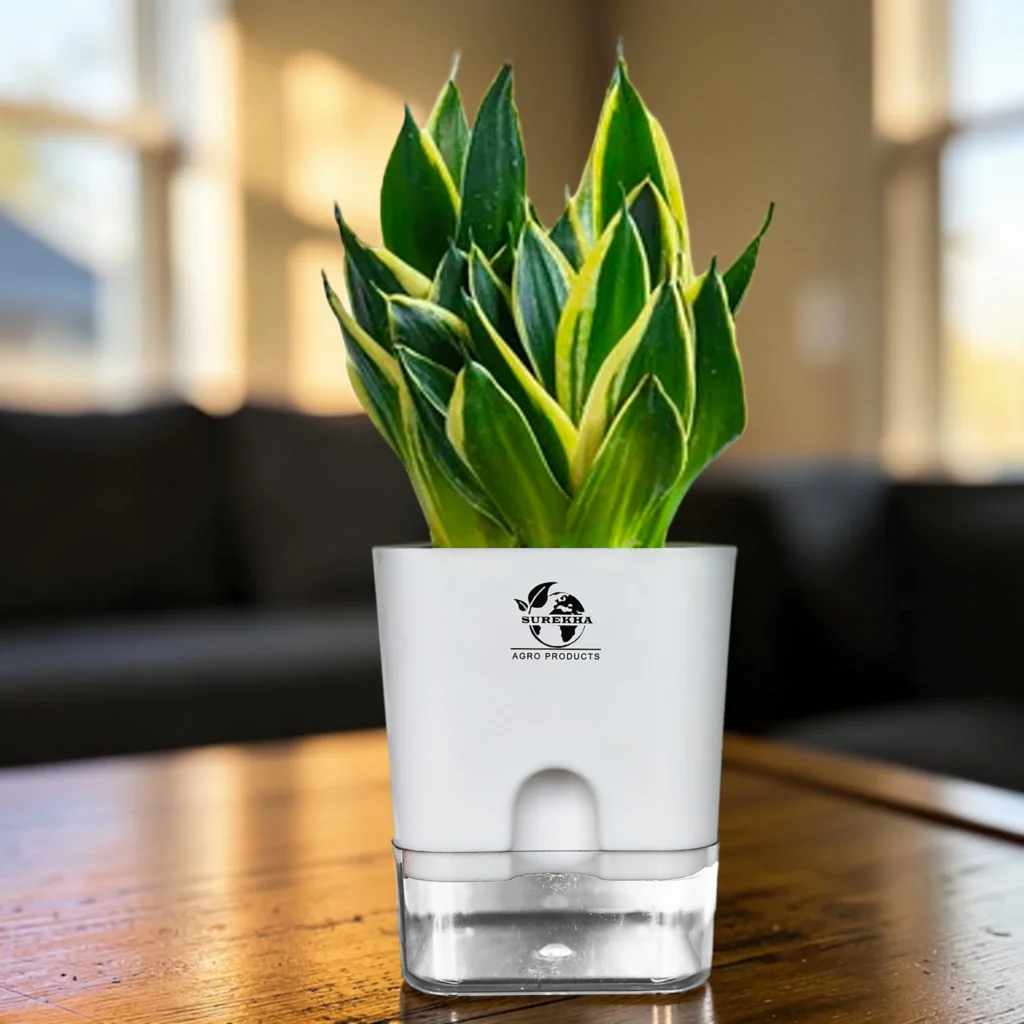
Surekha Golden Hahnii Snake Plant
Price range: ₹249.00 through ₹399.00 -
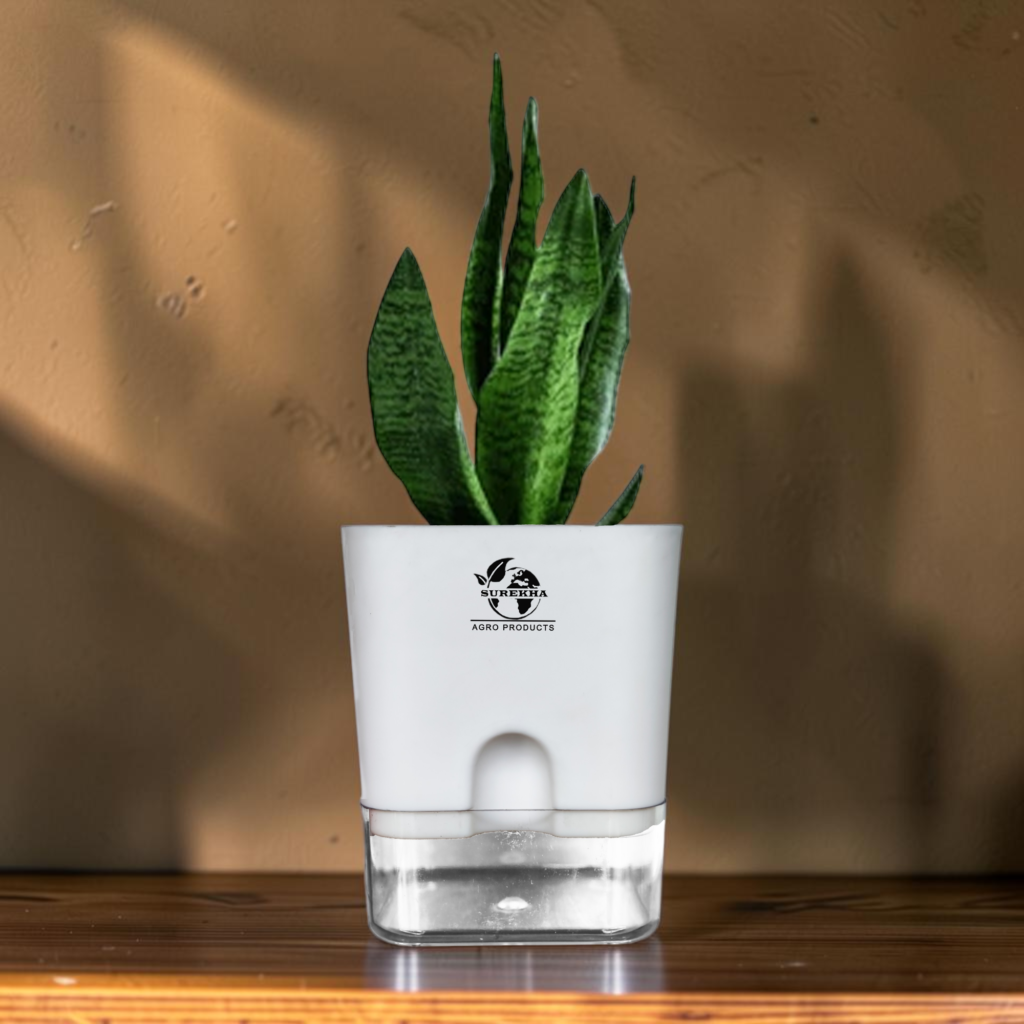
Surekha Sansevieria Green Snake Plant
Price range: ₹299.00 through ₹399.00 -
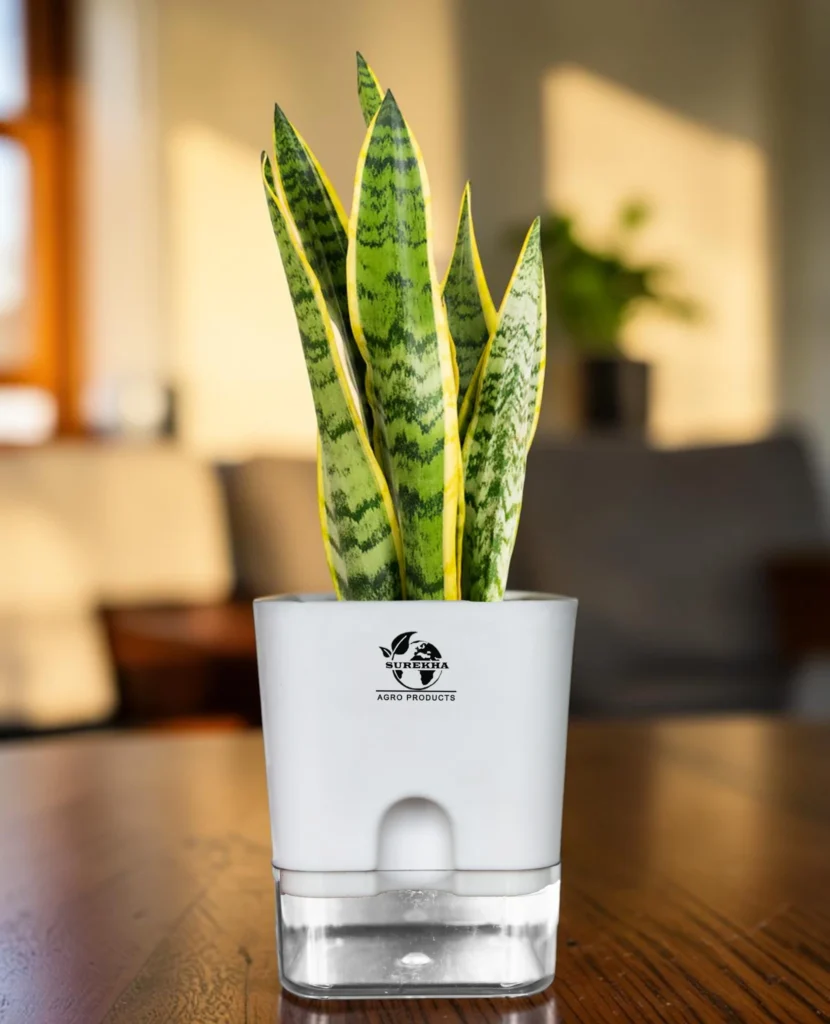
Surekha Sansevieria Laurentii Snake Plant
Price range: ₹249.00 through ₹399.00 -
Surekha Sansevieria Superba Snake Plant
Price range: ₹269.00 through ₹399.00 -
Surekha Sansevieria Whitney Snake Plant
Price range: ₹399.00 through ₹499.00 -
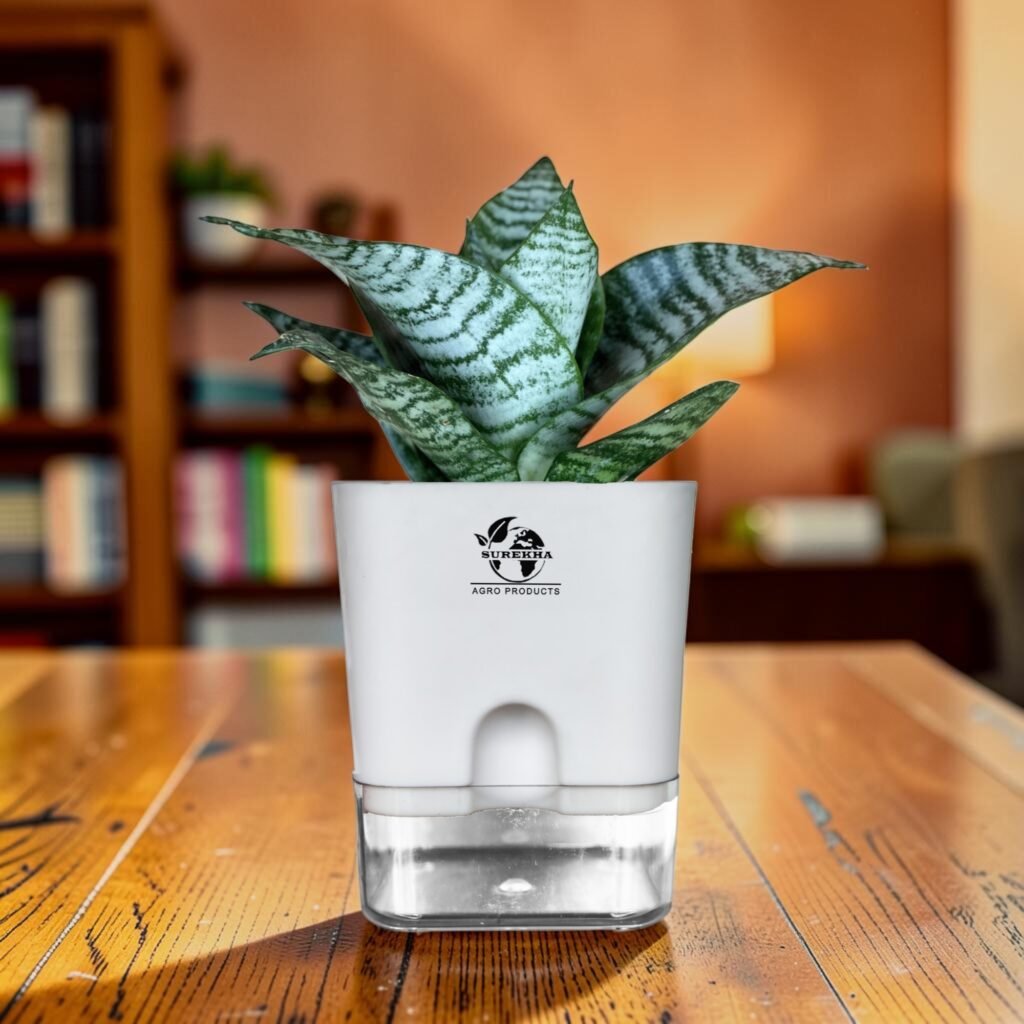
Surekha Silver Hahnii Snake Plant
Price range: ₹299.00 through ₹499.00 -
Surekha snake plant sansevieria zeylanica
Price range: ₹299.00 through ₹399.00